1-855-QUOTEMR

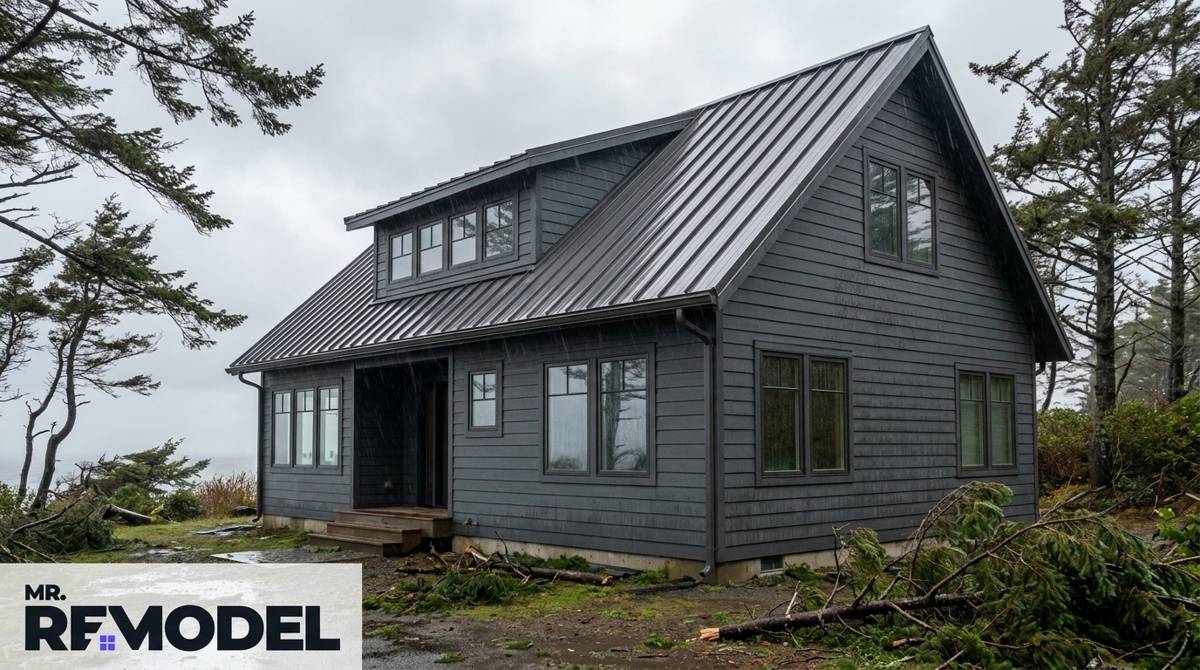
Table of Contents [hide]
Who This Is For:
Homeowners who live in hurricane, tornado, hail, high-wind, or severe thunderstorm regions and want siding that can better handle impact, moisture, wind-driven rain, and long-term weather exposure.
Key Takeaways:
- No Siding Is Storm-Proof: Severe weather can damage any exterior material.
- Installation Matters: Fastening, flashing, water barriers, and code-compliant installation affect storm performance.
- Material Choice Depends on Risk: Hurricane zones, hail-prone areas, and windy regions may need different siding priorities.
- Vinyl Leads Tracked Demand: Vinyl generated 4,057 Mr. Remodel siding inquiries, but popularity does not determine storm resistance.
- Contractor Experience Counts: Severe-weather siding should be installed by contractors familiar with local codes and manufacturer requirements.
Choosing siding in a storm-prone area is about more than curb appeal. The best siding for storm-prone areas should resist wind, rain, impacts, moisture intrusion, and repeated exposure to weather.
No siding material can make a home storm-proof. Hurricanes, tornadoes, hail, and flying debris can damage even strong exterior systems. The goal is to choose siding that fits your local risks and has it installed correctly.
What Makes Storms Hard on Siding?
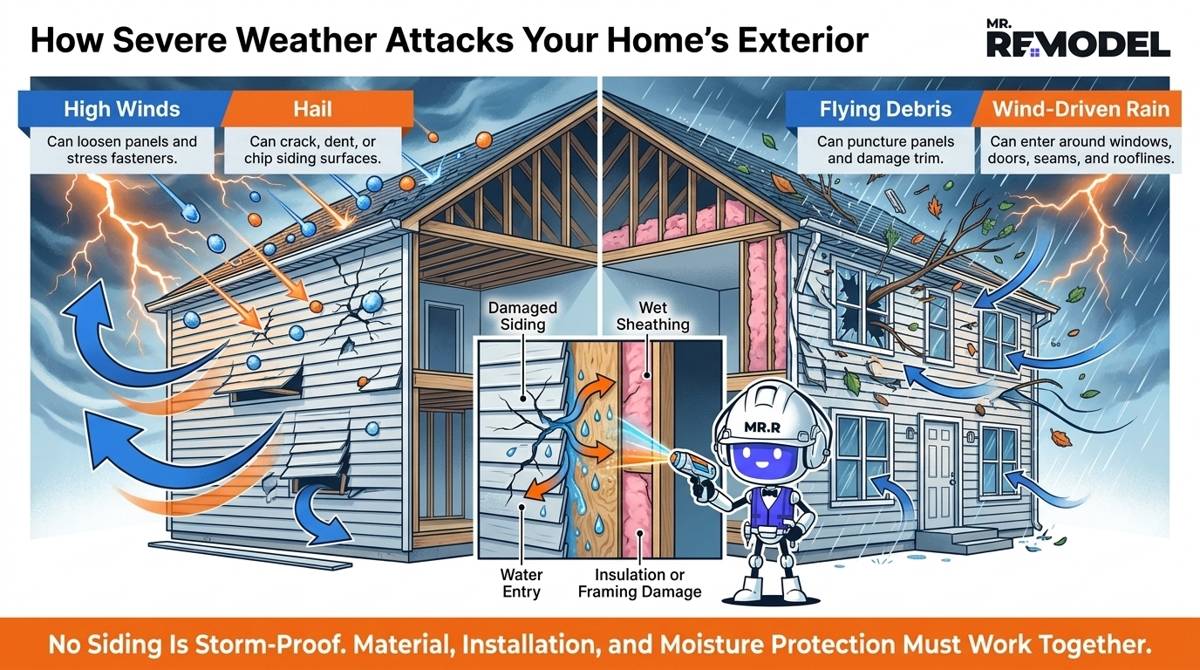
Storms damage siding in several ways. Wind can pull panels loose, hail can crack or dent surfaces, and flying debris can puncture or break exterior materials.
Wind-driven rain is another major risk. Water can enter around windows, doors, seams, trim, rooflines, and damaged siding. If moisture gets behind the siding and cannot drain, it may damage sheathing, insulation, framing, or interior finishes.
The Federal Emergency Management Agency (FEMA) Home Builder’s Guide to Coastal Construction explains how siding and exterior walls should be considered in high-wind, coastal, and severe-weather settings.
Severe weather can also create long-term wear. Repeated storms may loosen fasteners, damage caulk, stain siding, or expose weak installation details.
Best Siding Materials for Storm-Prone Areas
The right siding depends on your main storm risk. A hail-prone home may need impact resistance. A hurricane-zone home may need wind-rated installation and strong moisture protection.
Fiber Cement
Fiber cement is often a strong option for storm-prone homes because it is durable, pest-resistant, and less likely to warp than some lighter materials. It can also offer better fire resistance than vinyl or wood.
Fiber cement may be a good fit if you want strong durability, a premium wood-like appearance, and better resistance to impact than many basic siding products.
The trade-off is installation. Fiber cement is heavy and must be installed with correct fastening, clearances, flashing, and caulking. Poor installation can reduce performance in storms.
See Related: Fiber Cement Siding
Vinyl
Vinyl siding is popular because it is affordable, low-maintenance, and widely available. In Mr. Remodel's data, vinyl is the most-requested tracked siding material.
Vinyl can work in storm-prone areas when homeowners choose quality products and proper installation. However, basic vinyl may crack from hail or flying debris, and panels can loosen in high winds if installed poorly.
Vinyl may be a good fit for homeowners who want lower upfront cost, low maintenance, and easier section replacement when matching material is available.
Engineered Wood
Engineered wood can offer strong curb appeal and good impact resistance, depending on the product. It is often chosen by homeowners who want a wood-like look with modern product design.
In storm-prone regions, moisture management is critical. Edges, cuts, flashing, and clearances must be handled carefully to prevent wind-driven rain from causing long-term damage.
Metal
Metal siding can be durable, pest resistant, and fire-resistant. Steel may provide strong impact resistance, while aluminum is lighter and naturally corrosion-resistant.
The trade-offs are denting, noise during hail or heavy rain, corrosion risk for some steel products, and specialized installation. In coastal storm zones, fasteners and coatings matter.
Stucco
Stucco can provide strong fire resistance and a solid exterior look. However, storm damage can be difficult to repair cleanly because matching texture and color requires skill.
Stucco also needs strong moisture management. Cracks, poor flashing, or trapped water can create hidden damage after storms.
Wood
Wood siding can look beautiful, but it requires more maintenance in storm-prone areas. Wind-driven rain, hail, and debris can damage paint, stain, boards, and joints.
Wood may still work on certain homes, but homeowners should be ready for regular inspection, sealing, painting, and repairs after severe weather.
Choosing Siding Based on Your Storm Risk
Different storms create different siding priorities.
In hurricane-prone regions, homeowners should think beyond material alone. Fastening, sheathing, flashing, water-resistant barriers, windows, doors, roof connections, and local code compliance all matter.
The Insurance Institute for Business & Home Safety (IBHS) FORTIFIED Home Standard focuses on strengthening homes against severe weather. Homeowners can use it as a starting point for asking better questions about resilient exterior upgrades.
In tornado-prone regions, no siding can fully protect against a strong tornado. Homeowners should focus on impact resistance, secure installation, and fast repair after damage.
In hail-prone areas, fiber cement, engineered wood, and some metal products may be worth comparing. Hail can crack vinyl, dent metal, chip paint, and damage wood finishes.
In coastal storm zones, siding should be paired with corrosion-resistant fasteners, strong flashing, and a wall system that can drain and dry.
See Related: How to Choose the Best Siding
Replacing storm-damaged siding? Get a free quote from fully vetted local siding contractors.
Installation Matters More Than Many Homeowners Realize
A strong siding material can still fail if it is installed poorly. In storm-prone areas, installation quality is one of the most important parts of the project.
Contractors should follow manufacturer instructions, local building codes, and wind-zone requirements. Fasteners, spacing, flashing, trim details, and water-resistant barriers all affect performance.
The National Oceanic and Atmospheric Administration (NOAA) National Weather Service provides severe weather safety resources that highlight how damaging storms can be. For siding, the key lesson is simple: plan for the local hazards your home actually faces.
The Federal Alliance for Safe Homes (FLASH) offers disaster safety resources that can help homeowners think about resilience, maintenance, and storm preparation beyond siding alone.
Common Mistakes to Avoid
Do not choose siding based only on appearance. A material that looks great may not be the best fit for hail, high wind, or storm-driven rain.
Avoid ignoring wind ratings, impact resistance, and moisture details. Ask whether the siding product is appropriate for your local weather risks and how the contractor handles fastening, flashing, and water barriers.
Do not delay repairs after storms. Loose panels, cracked siding, damaged caulk, or open seams can allow water into the wall system.
Finally, avoid hiring contractors unfamiliar with severe-weather installation requirements. Storm-prone homes need contractors who understand local codes, manufacturer instructions, and regional weather risks.
See Related: Siding Replacement Guide
Frequently Asked Questions
What is the best siding for hurricane-prone areas?
Fiber cement, impact-rated vinyl, engineered wood, metal, and properly installed stucco may all be options for hurricane-prone areas. The best choice depends on wind ratings, local codes, moisture protection, fasteners, wall condition, and contractor experience.
Which siding holds up best in high winds?
High-wind performance depends on both the material and installation. Proper fastening, manufacturer-approved installation, sheathing condition, flashing, and local code compliance all affect how siding performs during high winds.
Is fiber cement more storm-resistant than vinyl?
Fiber cement is often more impact-resistant and durable than basic vinyl, but vinyl can still work in storm-prone areas when homeowners choose quality products and proper installation. The better choice depends on local storm risks and budget.
Can siding withstand hail damage?
Some siding materials handle hail better than others, but no siding is completely hail-proof. Fiber cement, engineered wood, and some metal products may offer stronger impact resistance, while vinyl can crack under severe hail.
Best Siding for Storm-Prone Areas: Final Takeaway
The best siding for severe weather depends on your local storm risk. Fiber cement, engineered wood, metal, vinyl, stucco, and wood each have strengths and trade-offs for wind, hail, moisture, and long-term maintenance.
No siding is storm-proof. The right material, proper installation, moisture protection, and experienced contractors all matter. To compare storm-ready siding options, connect with fully vetted local siding contractors.