1-855-QUOTEMR

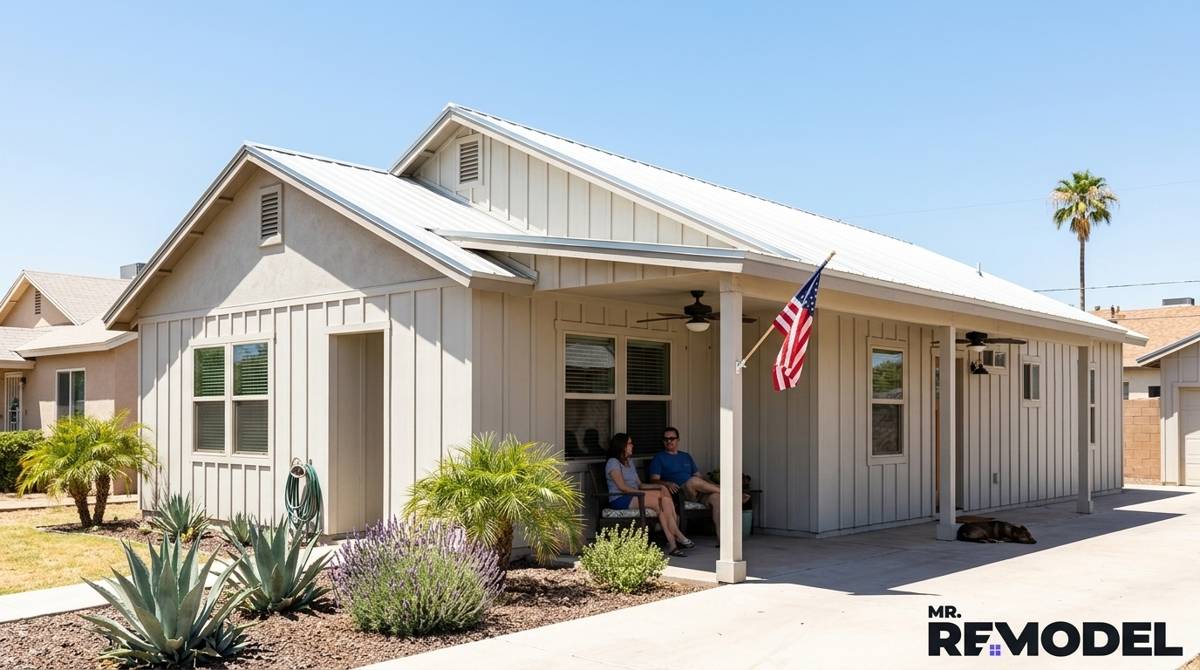
Table of Contents [hide]
Who This Is For:
Homeowners who live in hot, sunny, humid, coastal, desert, or wildfire-prone climates and want siding that can handle heat, ultraviolet exposure, local weather, maintenance needs, and long-term energy goals.
Key Takeaways:
- Heat Is Only One Factor: Hot climates can also include humidity, storms, salt air, wildfire risk, and intense sun.
- Material Choice Should Match Local Conditions: Fiber cement, engineered wood, metal, stucco, and insulated vinyl can all make sense in different hot-climate settings.
- Vinyl Leads Tracked Demand: Vinyl generated 4,057 Mr. Remodel siding inquiries, but popularity does not prove climate performance.
- Color and Installation Matter: Lighter colors, proper house wrap, air sealing, and skilled installation can affect comfort and durability.
- Local Quotes Are Important: Contractors familiar with your climate can help compare material performance, warranties, and long-term maintenance.
Choosing siding in a hot climate is not just about finding a material that can handle high temperatures. The best siding for hot climates should also stand up to sun exposure, seasonal storms, humidity, moisture, pests, and local fire risks.
There is no single best choice for every warm region. A coastal home in Florida faces different exterior challenges than a desert home in Arizona or a wildfire-prone home in California. The right siding depends on climate, budget, maintenance expectations, and installation quality.
What Makes Siding Perform Well in Hot Climates?
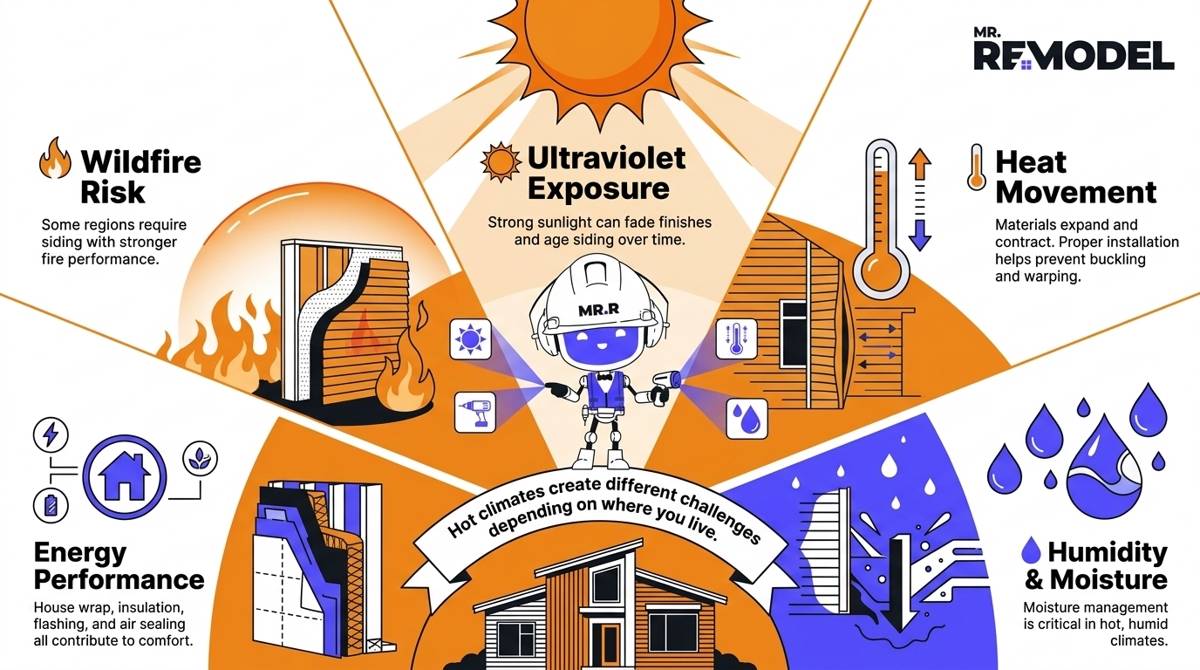
Hot-climate siding needs to do more than survive heat. It should help protect the home from sun, moisture, movement, and local weather patterns.
Ultraviolet Resistance
Strong sunlight and ultraviolet (UV) exposure can fade colors, weaken finishes, and age exterior materials faster. This is especially important in sunny climates where siding receives direct exposure for much of the year.
Homeowners should ask about color fade resistance, finish warranties, and how the material performs in high-sun regions.
Heat Movement
Some siding materials expand and contract as temperatures change. Vinyl, metal, and engineered products all need proper installation space and fastening so they can move without buckling or warping.
A material may perform poorly if it is installed too tightly, even if the product itself is well-made.
Moisture and Humidity
Hot climates are not always dry. Humid regions need siding that can manage moisture, resist rot, and allow proper drainage behind the exterior surface.
The Federal Emergency Management Agency (FEMA) Home Builder’s Guide to Coastal Construction explains siding and exterior wall concerns in coastal and wind-driven rain conditions.
Energy Performance
Siding alone does not determine cooling costs, but siding replacement can be a good time to review the full exterior wall system. House wrap, insulation, air sealing, flashing, and color choice all matter.
The United States Department of Energy’s Energy Saver design guidance explains how exterior upgrades fit into broader home energy performance.
Fire Risk
Some hot climates also face wildfire risk. In these areas, homeowners should consider fire performance, local code requirements, defensible space, roof materials, vents, decks, and landscaping.
The National Institute of Standards and Technology (NIST) provides fire research and resources through its fire performance work, which can help homeowners understand why building materials and full-home fire planning matter.
Best Siding Materials for Hot Climates
The best siding material depends on the type of hot climate you live in. Some materials are better for dry heat. Others are better for humidity, coastal exposure, or wildfire risk.
Fiber Cement
Fiber cement is often a strong option for hot climates because it is durable, fire-resistant, and less likely to warp from heat than some materials. It can also provide a painted wood-like look without the same maintenance needs as natural wood.
It may be a good fit for homeowners who want:
- Strong durability
- Fire resistance
- A premium exterior look
- Lower maintenance than wood
- Good performance in many warm regions
The trade-off is cost and installation. Fiber cement is heavy, and proper installation is important. It may also need repainting or finish care over time.
See Related: Fiber Cement Siding
Vinyl
Vinyl is popular because it is affordable, low-maintenance, and widely available. In the Mr. Remodel dataset, vinyl generated 4,057 inquiries, making it the most requested tracked siding material.
Vinyl can work in many hot climates, but product quality and installation matter. Intense heat may cause lower-quality vinyl to warp, expand, or fade faster, especially in dark colors or areas with reflected heat.
Vinyl may be a good fit for homeowners who want:
- Lower upfront cost
- Low maintenance
- Many color and style options
- A practical whole-home replacement
It may not be the best fit for homes exposed to extreme heat reflection, intense sun, or higher fire risk.
See Related: Vinyl Siding
Engineered Wood
Engineered wood can offer a warmer, more natural appearance than basic vinyl. It is often chosen by homeowners who want a wood-like look without using traditional natural wood siding.
In hot climates, the performance of engineered wood depends heavily on moisture control, finish condition, and installation. It may work well in some warm regions, but humid or storm-prone areas require careful detailing.
Engineered wood may be a good fit for homeowners who want:
- Wood-like texture
- Strong curb appeal
- A lighter material than fiber cement
- A premium alternative to vinyl
Homeowners should ask about sealing, clearances, finish maintenance, and local climate performance.
See Related: Engineered Wood Siding
Metal
Metal siding can be a durable option for hot climates, especially on modern homes or homes exposed to pests, fire concerns, or harsh weather. Steel and aluminum each perform differently.
Metal can reflect heat depending on color and finish, but it can also expand and contract with temperature changes. Proper installation helps prevent movement problems.
Metal may be a good fit for homeowners who want:
- Long lifespan potential
- Fire resistance
- Pest resistance
- Modern curb appeal
- Lower maintenance than wood
The trade-offs include cost, denting, possible noise during rain or hail, and the need for experienced installation.
Stucco
Stucco is common in many hot and dry regions. It can create a seamless exterior finish and works well with Mediterranean, Spanish, Southwestern, and desert-modern home styles.
Stucco may be a good fit for homeowners who want:
- A smooth or textured finish
- Strong regional curb appeal
- Good fire resistance
- A material common in dry climates
The main concern is moisture. Stucco can become risky when water gets trapped behind the surface, especially in humid, rainy, or freeze-thaw climates.
See Related: Stucco vs Siding
Brick Veneer
Brick veneer is not usually grouped with standard siding, but homeowners may compare it during exterior upgrades. It can offer long lifespan potential, strong curb appeal, and good heat durability.
The trade-off is cost, weight, and installation complexity. It is usually more expensive than many siding options and requires proper drainage behind the veneer.
Which Material Is Best for Different Hot Climates?
Hot climates vary. The right siding for a humid Southern home may be different from the right siding for a desert home.
Hot and Humid Climates
In hot and humid areas, moisture resistance is just as important as heat resistance. Vinyl, fiber cement, metal, and properly installed engineered wood may all be worth comparing.
The key is drainage. Siding needs proper house wrap, flashing, clearances, and ventilation behind the surface.
Hot and Dry Climates
In hot and dry regions, UV exposure, fading, and thermal movement are major concerns. Stucco, fiber cement, metal, and higher-quality vinyl may all perform well when installed correctly.
Light colors can help reduce heat absorption on the exterior surface.
Desert Climates
Desert climates can bring intense sun, large temperature swings, dust, and very dry air. Stucco is common in many desert regions, but fiber cement and metal may also be good options.
Homeowners should ask about fade resistance, heat movement, and how finishes hold up under constant sunlight.
Coastal Hot Climates
Coastal hot climates bring humidity, salt air, wind-driven rain, and storms. Fiber cement, aluminum, some vinyl products, and properly detailed exterior systems may be considered.
Coastal homes need strong flashing, corrosion-resistant fasteners, drainage, and local code awareness.
Wildfire-Prone Regions
In wildfire-prone regions, fire resistance becomes a major factor. Fiber cement, metal, stucco, and masonry options may be worth comparing.
No siding makes a home fireproof. Homeowners should also consider vents, roofing, decks, landscaping, and defensible space.
Replacing siding in a hot climate? Get a free quote from fully vetted local siding contractors.
How Color and Installation Affect Energy Efficiency
Material matters, but color and installation can also change how siding performs in hot climates.
The U.S. Department of Energy’s Cool Roofs guidance explains how lighter and more reflective surfaces can reduce heat absorption on roofs. While roofs and siding are different systems, the same basic idea helps explain why exterior color and reflectivity matter in sunny climates.
Lighter Colors Can Help
Dark siding absorbs more heat than lighter siding. In hot regions, lighter colors may help reduce surface temperatures and slow some heat-related wear.
That does not mean every home needs white siding. It means homeowners should think carefully before choosing very dark colors in intense sunlight.
Insulated Siding May Help Comfort
Insulated vinyl siding or exterior insulation upgrades may support comfort when combined with proper air sealing and wall assembly improvements.
Siding alone will not fix a poorly insulated home, but replacement can be a good time to discuss energy upgrades.
Installation Quality Is Critical
Even the right siding can fail early if it is installed poorly. Hot climates can make installation errors worse because materials move, expand, contract, and experience constant sun exposure.
Ask contractors about:
- House wrap
- Flashing
- Clearances
- Fasteners
- Expansion gaps
- Drainage
- Ventilation
- Manufacturer requirements
Common Mistakes to Avoid
Choosing siding for hot weather should be a careful decision. Avoiding common mistakes can help protect your investment.
Choosing Only by Price
A low-cost material may look attractive, but it may not hold up well in your specific climate. Compare long-term maintenance, warranty, and expected performance.
Ignoring UV Exposure
Sun can fade finishes and weaken exterior materials over time. Ask about color performance and finish warranties before choosing.
Choosing Dark Colors Without Considering Heat
Dark siding can look beautiful, but it may absorb more heat. In very sunny areas, ask whether the product and color are recommended for your climate.
Overlooking Humidity
Hot and humid climates need strong moisture management. Do not choose siding based on heat alone.
Hiring Inexperienced Installers
Many siding problems come from poor installation, not the material itself. Choose contractors who understand local climate conditions and manufacturer requirements.
See Related: Siding Replacement Guide
Frequently Asked Questions
What is the best siding for extremely hot climates?
Fiber cement, stucco, metal, and high-quality vinyl are common options to compare for extremely hot climates. The best choice depends on whether the area is dry, humid, coastal, wildfire-prone, or exposed to intense sun.
Does siding color affect cooling costs?
Siding color can affect how much heat the exterior surface absorbs. Lighter colors generally absorb less heat than darker colors, but overall cooling performance also depends on insulation, air sealing, windows, roofing, ventilation, and the full wall system.
Is vinyl siding good for hot weather?
Vinyl siding can work in many hot climates, especially when homeowners choose a quality product, an appropriate color, and skilled installation. In extreme heat or areas with reflected heat, vinyl may be more prone to warping, fading, or movement.
Is fiber cement better than vinyl in hot climates?
Fiber cement may be better than vinyl in hot climates where durability, fire resistance, and heat stability are major priorities. Vinyl may still be better for homeowners who want a lower upfront cost and low maintenance.
What siding requires the least maintenance in sunny climates?
Vinyl and metal are often among the lower-maintenance siding options in sunny climates. Fiber cement and engineered wood can also perform well, but they may need repainting or finish care over time, depending on exposure and product quality.
Best Siding for Hot Climates: Final Takeaway
The best siding for a hot climate depends on more than temperature. Homeowners should consider sun exposure, humidity, wildfire risk, coastal weather, maintenance, energy goals, and long-term durability before choosing.
Fiber cement, stucco, metal, engineered wood, insulated vinyl, and high-quality vinyl can all make sense in different hot-climate conditions. To compare your options, connect with fully vetted local siding contractors.