1-855-QUOTEMR

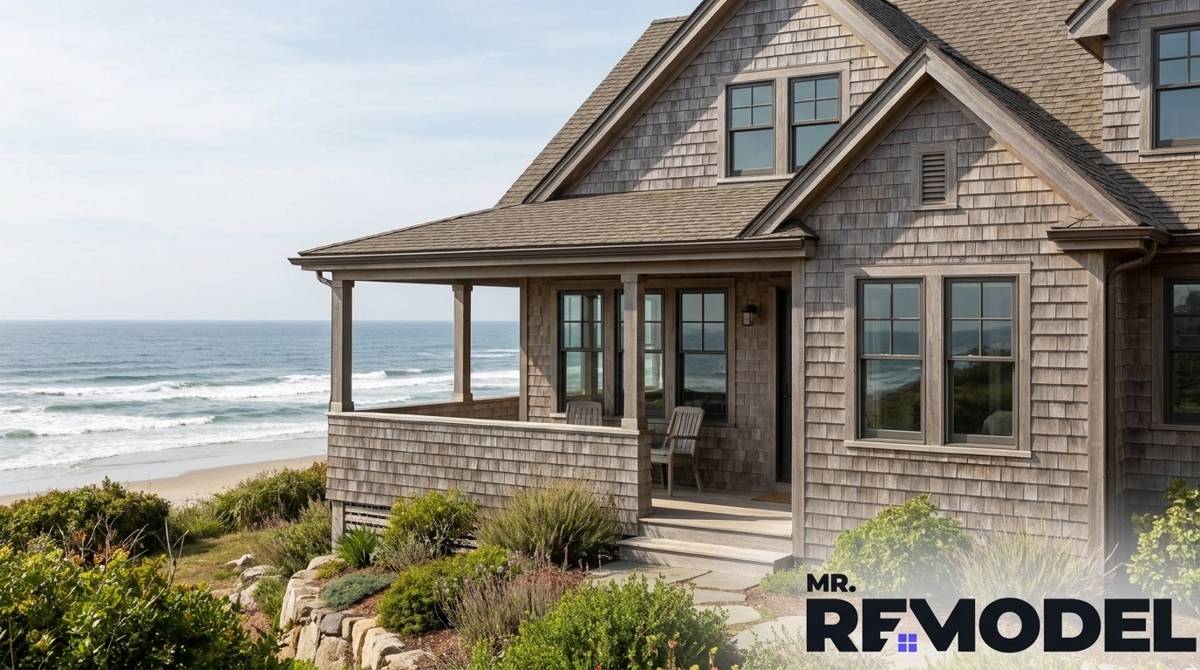
Table of Contents [hide]
Who This Is For:
Homeowners who live near the ocean, bays, barrier islands, or humid coastal regions and want siding that can handle salt air, moisture, wind-driven rain, storms, and long-term maintenance demands.
Key Takeaways:
- Coastal Homes Need Extra Protection: Salt air, humidity, wind, rain, and ultraviolet exposure can wear down exterior materials faster.
- Installation Matters as Much as Material: Flashing, drainage, water-resistant barriers, ventilation, and fasteners are critical near the coast.
- Vinyl Leads Tracked Demand: Vinyl generated 4,057 Mr. Remodel siding inquiries, but popularity does not prove coastal performance.
- Several Materials Can Work: Fiber cement, vinyl, engineered wood, stucco, metal, and cedar each fit different coastal conditions.
- Local Contractors Matter: Coastal siding should be installed by contractors who understand local weather, codes, and moisture risks.
Choosing siding for a coastal home is different from choosing siding inland. The best siding for coastal homes must handle salt air, humidity, wind-driven rain, strong sun, storms, and frequent moisture exposure.
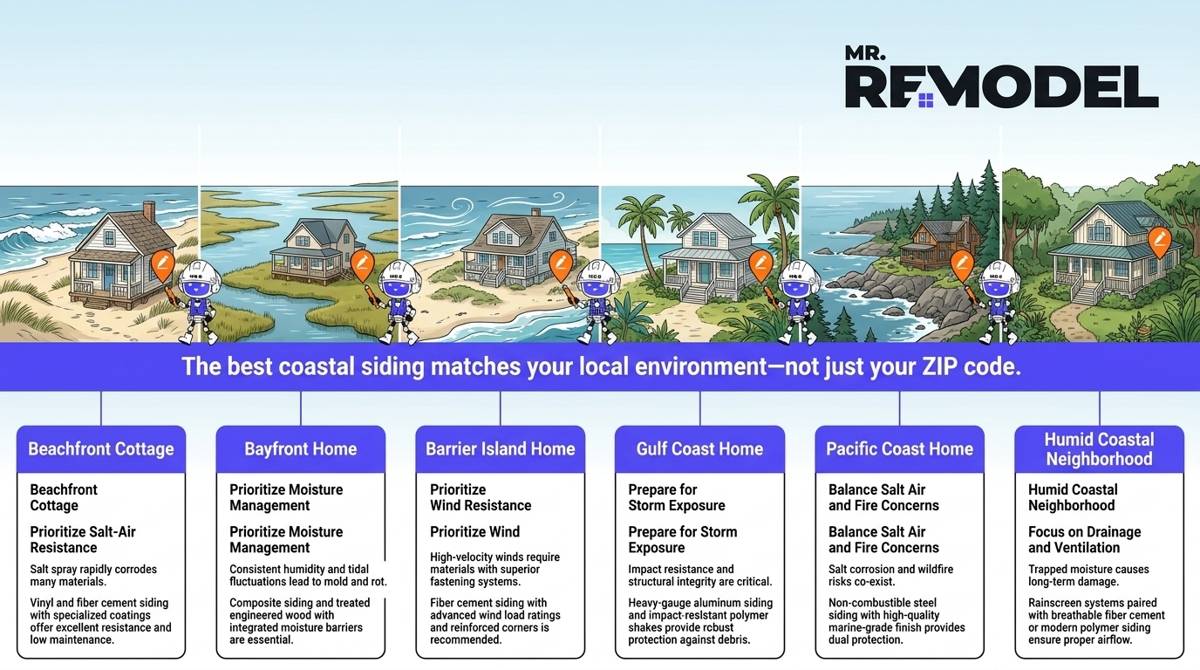
There is no single best coastal siding for every home. A beach house on the Atlantic Coast may need different protection than a bayfront home, a Gulf Coast property, or a Pacific Coast home exposed to salt air and wildfire concerns.
What Makes Coastal Homes Hard on Siding?
Coastal homes face more than ordinary weather. The exterior is exposed to moisture, salt, sunlight, wind, and storms more often than many inland homes.
Salt air can speed up corrosion on metal parts, fasteners, trim, flashing, and some siding systems. Even when siding panels hold up well, the wrong fasteners can stain, loosen, or fail over time.
High humidity can also make siding maintenance harder. Moisture can collect behind siding if the wall system is not built to drain and dry properly.
The Building America Solution Center’s Water Management System Builder’s Guide explains the importance of drainage planes, water-resistant barriers, flashing, and moisture control in exterior wall systems.
Coastal storms can push rain sideways into weak points around windows, doors, seams, trim, and rooflines. The Federal Emergency Management Agency (FEMA) Home Builder’s Guide to Coastal Construction explains siding and exterior wall considerations for coastal, high-wind, and severe-weather conditions.
Strong sunlight and ultraviolet (UV) exposure can fade finishes, dry out materials, and shorten the life of paint or stain. Humid coastal conditions can also encourage mildew, algae, and surface staining.
Best Siding Materials for Coastal Homes
The right material depends on how close the home is to saltwater, how much storm exposure it gets, and how much maintenance the homeowner wants to manage.
Fiber Cement
Fiber cement is often a strong coastal siding option because it resists rot, pests, and fire better than natural wood. It can also offer a painted wood-like appearance without the same level of upkeep.
Fiber cement may be a good fit for coastal homeowners who want strong durability, lower maintenance than wood, and a premium exterior look. The trade-off is installation. Fiber cement is heavy and must be installed with proper clearances, flashing, caulking, and drainage.
See Related: Vinyl vs Fiber Cement Siding
Vinyl
Vinyl siding is popular because it is affordable, low-maintenance, and widely available. In the Mr. Remodel dataset, vinyl generated 4,057 inquiries, making it the most requested tracked siding material.
Vinyl can work in some coastal settings because it does not rot and does not corrode like metal. However, coastal homeowners should consider wind ratings, product quality, impact resistance, and how the siding performs under intense sun.
The trade-off is that vinyl may crack from impact, fade over time, or become vulnerable in extreme wind if not installed correctly.
See Related: Types of Siding
Engineered Wood
Engineered wood siding can offer a warmer, more natural appearance than basic vinyl. It may be a good option for coastal homes when the product is installed and maintained carefully.
The main concern is moisture. Coastal homes need strong water management, sealed edges, proper clearances, and maintenance of the finish.
Homeowners should ask contractors how the product performs near salt air, heavy humidity, and wind-driven rain.
Stucco
Stucco can work well in some coastal regions, especially where it is common and local contractors understand coastal wall systems. It offers a seamless look and strong fire resistance.
However, stucco can become a problem when water gets trapped behind the surface. Cracks, poor flashing, and weak drainage can lead to hidden damage.
Stucco may be a good fit when the local climate supports it, skilled stucco contractors are available, and routine crack inspection is part of maintenance.
Metal
Metal siding can offer durability, fire resistance, and modern curb appeal. However, coastal salt air can be a major concern for some metal products and fasteners.
Aluminum may resist rust better than steel, while steel depends on protective coatings. Both require careful product selection in salt-air environments.
Homeowners considering metal should ask about coastal-rated coatings, corrosion-resistant fasteners, dent resistance, and long-term finish care.
Cedar and Other Wood Siding
Cedar and other wood siding can look beautiful on coastal homes. Natural wood has warmth and character that manufactured products often try to imitate.
The United States Forest Service Forest Products Laboratory’s Wood Handbook explains wood durability, moisture, and decay behavior, which are important when considering wood in damp or coastal environments.
The trade-off is maintenance. Wood needs regular sealing, staining or painting, caulking, inspection, and repairs to manage moisture and sun exposure.
How Proper Installation Protects Coastal Homes
A good coastal siding project is about more than choosing the right material. Installation details often decide how well the siding performs.
A rainscreen or drainage space can help water escape and allow the wall to dry. This is especially useful where wind-driven rain is common.
Flashing around windows, doors, rooflines, decks, and trim helps direct water away from vulnerable areas. Poor flashing is one of the biggest causes of hidden moisture damage.
Water-resistant barriers help protect the wall behind siding. They should be installed correctly and integrated with flashing and drainage details.
Coastal homes also need fasteners that can handle salt exposure. The wrong fasteners can corrode, stain siding, or weaken the exterior system.
Replacing siding on a coastal home? Get a free quote from fully vetted local siding contractors.
Common Mistakes to Avoid
Choosing coastal siding based only on appearance can lead to expensive problems later.
Do not ignore salt-air exposure. Salt air can affect fasteners, trim, coatings, and some metal products, so ask whether the products are suitable for coastal conditions.
Do not overlook fasteners. Fasteners are easy to miss in a quote, but they matter near the coast. Ask what type will be used and whether they match the siding manufacturer’s requirements.
Do not delay repairs after storm damage. Small gaps, cracks, or loosened panels can allow moisture into the wall system.
Low maintenance also doesn’t mean no maintenance. Coastal siding should be cleaned and inspected regularly, especially after storms.
Finally, avoid hiring contractors without coastal experience. Coastal homes need contractors who understand wind, moisture, salt air, and local code requirements.
See Related: Siding Replacement Guide
Frequently Asked Questions
What is the best siding for homes near the ocean?
Fiber cement, vinyl, engineered wood, stucco, metal, and cedar can all work near the ocean, depending on exposure, maintenance, budget, and installation quality. The best choice depends on salt air, humidity, wind, storms, and local building requirements.
Does salt air damage vinyl siding?
Salt air does not corrode vinyl the way it can affect some metals, but coastal conditions can still cause staining, mildew, fading, and wear. Vinyl siding near the coast should be cleaned and inspected regularly.
Is fiber cement good for coastal homes?
Fiber cement can be a good option for coastal homes when installed correctly. It resists rot and pests better than natural wood, but it still needs proper flashing, clearances, caulking, drainage, and maintenance.
What siding holds up best during hurricanes?
No siding material is hurricane-proof by itself. Fiber cement, vinyl, metal, stucco, and engineered wood may all have products designed for stronger performance, but wind rating, fastening, sheathing, windows, doors, roof connections, and installation quality all matter.
Best Siding for Coastal Homes: Final Takeaway
The best siding for a coastal home depends on salt air, humidity, storm exposure, sun, maintenance expectations, and installation quality. Fiber cement, vinyl, engineered wood, stucco, metal, and cedar can all make sense in different coastal settings.
The most important step is choosing a material and contractor that fits your local conditions. To compare coastal siding options, connect with fully vetted local siding contractors.