1-855-QUOTEMR

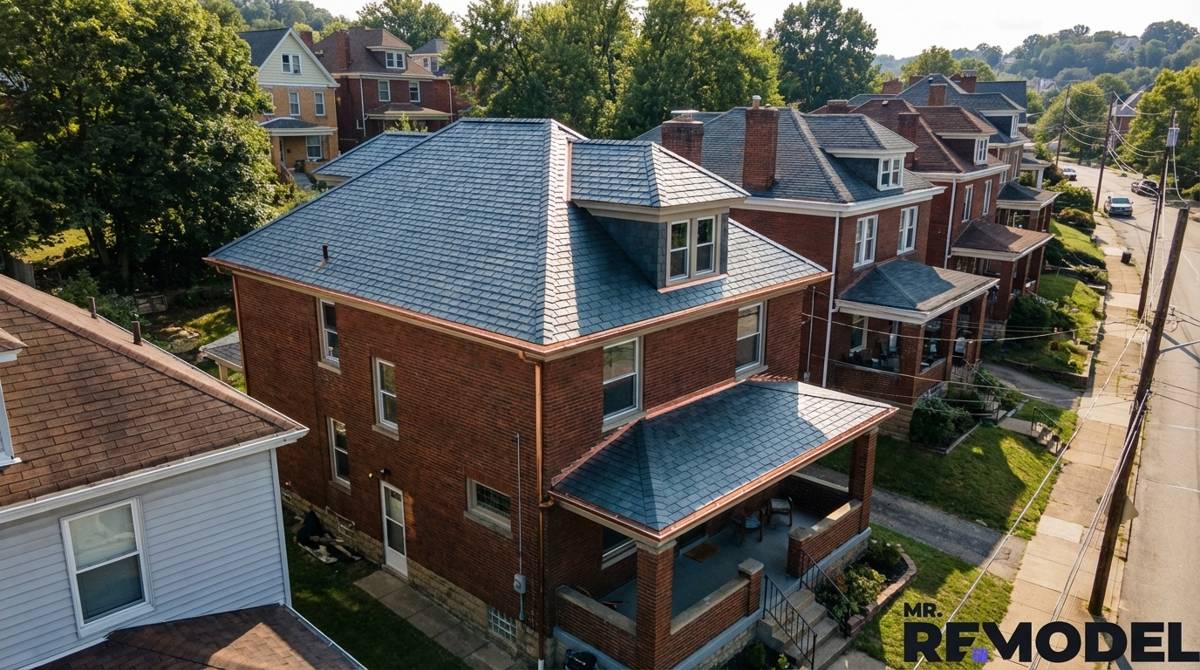
Table of Contents [hide]
Who This Is For
This guide helps homeowners in Pittsburgh navigate complex roof repairs. It is specifically written for residents in the North Side (15212), South Side (15210), and East End who own pre-1950s Victorian or Craftsman homes. It is also essential reading for Penn Hills (15235) homeowners dealing with ice dams on post-war brick structures.
Key Takeaways
- Specialized Drainage: Historic Pittsburgh homes use built-in box gutters that require soldered terne or EPDM lining instead of standard aluminum replacements.
- Code Compliance: To prevent leaks during winter, PA code R905.1.2 mandates that ice barriers extend at least 24 inches inside the exterior wall line.
- Preservation Rules: Homes in historic districts need a Certificate of Appropriateness from the Historic Review Commission before you make visible roof changes.
- Material Options: Synthetic slate provides a durable and lighter alternative to quarried stone while maintaining the historic aesthetic required in many city neighborhoods.
- Financial Support: Local programs like the Whole-Home Repairs Program can provide eligible residents with up to $35,000 in assistance for critical roof work.
Owning a home in Western Pennsylvania means dealing with unique architectural and weather-related challenges. The steep slopes of the North Side and the unpredictable freeze/thaw cycles of our winters require more than just basic shingles. Your home likely has character features that demand specialized care which general contractors often ignore.
You need a team that understands the difference between a standard replacement and a true historic restoration. When you begin vetting roofing companies in Pittsburgh, you will find that many are franchises focused solely on asphalt.
According to Mr. Remodel data, 35% of local inquiries are specifically for slate or metal roofing needs. This guide explores the technical nuances of box gutters, ice dam prevention, and historic preservation to help you protect your biggest investment.
The Pittsburgh Challenge: Historic Roofs Need Specialists
Most roofing contractors focus exclusively on asphalt shingles because it is fast and easy work. While this suits modern suburban developments, it can be disastrous for the Victorian and Craftsman homes found in zip codes like 15212 or 15210. These structures demand specific restoration techniques to maintain their structural integrity and property value.
Restoring Box Gutters (Built-in Gutters)
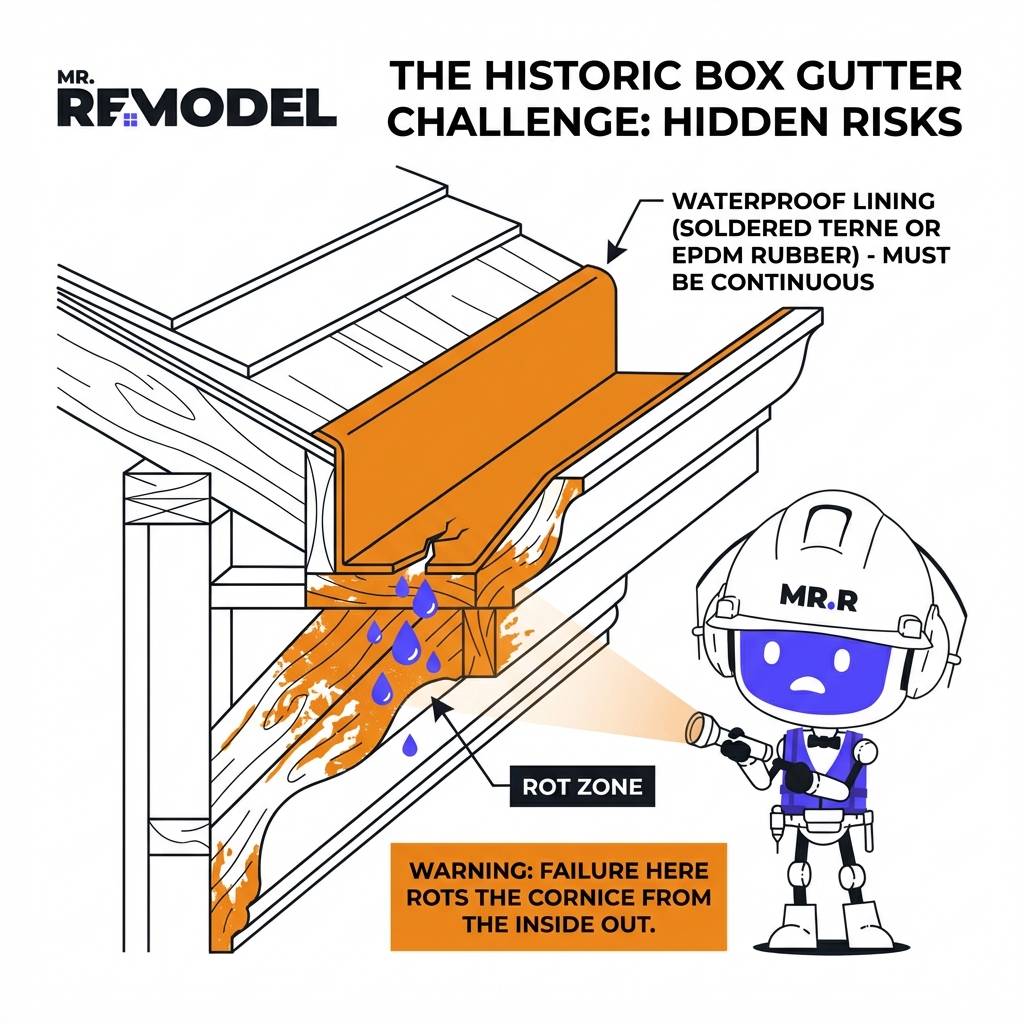
One of the defining features of Pittsburgh's older housing stock is the box gutter. Unlike modern aluminum gutters that hang off the fascia, box gutters are built directly into the roof overhang. They are concealed from view on the ground but play a critical role in managing heavy rainfall.
Standard roofing crews often try to bypass these systems or cover them up to save time. This is a critical mistake. Box gutters must be properly lined to function correctly. The most effective restoration methods involve:
- Relining the trough: This uses soldered terne-coated stainless steel.
- Installing membranes: A rubber membrane known as EPDM creates a watertight seal.
If these hidden channels are not lined correctly, water will eventually seep into the cornice. This causes the wood structure to rot from the inside out. When you review proposals, you must ensure the contractor specifically mentions relining box gutters rather than just replacing downspouts.
The Slate vs. Synthetic Decision
Slate roofs are a hallmark of Pittsburgh architecture. A well-maintained slate roof can last over a century. However, repairs are expensive. Finding quarried stone that matches the original color of your 100-year-old roof can be difficult.
For many homeowners, the best solution is synthetic slate. Products like DaVinci roofscapes offer the visual appeal of natural stone but are significantly lighter. They are also more durable against hail damage. Synthetic options are increasingly popular because they respect the architectural style of the home while offering modern weather resistance.
If you live in a historic district, you must verify that synthetic materials are permitted before installation. Mr. Remodel can connect you with a roofing specialist who will know how to navigate these requirements with the local review boards.
Navigating Local Codes and Weather Patterns
Pittsburgh resides in a climate zone that experiences frequent freezing and thawing. This thermal cycling creates ice dams. Ice dams are ridges of ice that form at the edge of a roof and prevent melting snow from draining off.
Preventing Leaks with Code Compliance
Ice dams force water to back up under the shingles. This leads to leaks in your attic or interior walls. To combat this, the PA Uniform Construction Code adheres to specific standards regarding ice barriers.
Section R905.1.2 of the International Residential Code (IRC) mandates that an ice barrier must be installed. This self-adhering polymer modified bitumen sheet must extend from the lowest edges of all roof surfaces to a point at least 24 inches inside the exterior wall line of the building.
Many budget contractors only apply the barrier to the immediate edge of the roof to save money on materials. This is often insufficient for Pittsburgh winters. You should insist on the full 24-inch extension. This ensures your home is compliant and protected against water infiltration.
Snow Guards for Steep Slopes
Steep roofs are common in our hilly topography. When snow accumulates on a smooth slate or metal roof, it can slide off in massive sheets. This poses a danger to pedestrians, cars, and landscaping below.
Snow guards are individual devices or pipe rails installed on the roof surface. They hold snow in place so it melts gradually rather than falling all at once. If your home has a steep pitch, particularly in the city where houses are close to sidewalks, snow guards are a necessary safety feature. Mr. Remodel data suggests that many quotes overlook this item. You should be sure to ask for it explicitly.
Permitting and Financial Assistance in Allegheny County
Replacing a roof is a significant construction project. It almost always requires a permit. This is especially true if you are changing materials or making structural repairs to the decking.
Historic Review Commission (HRC) Guidelines
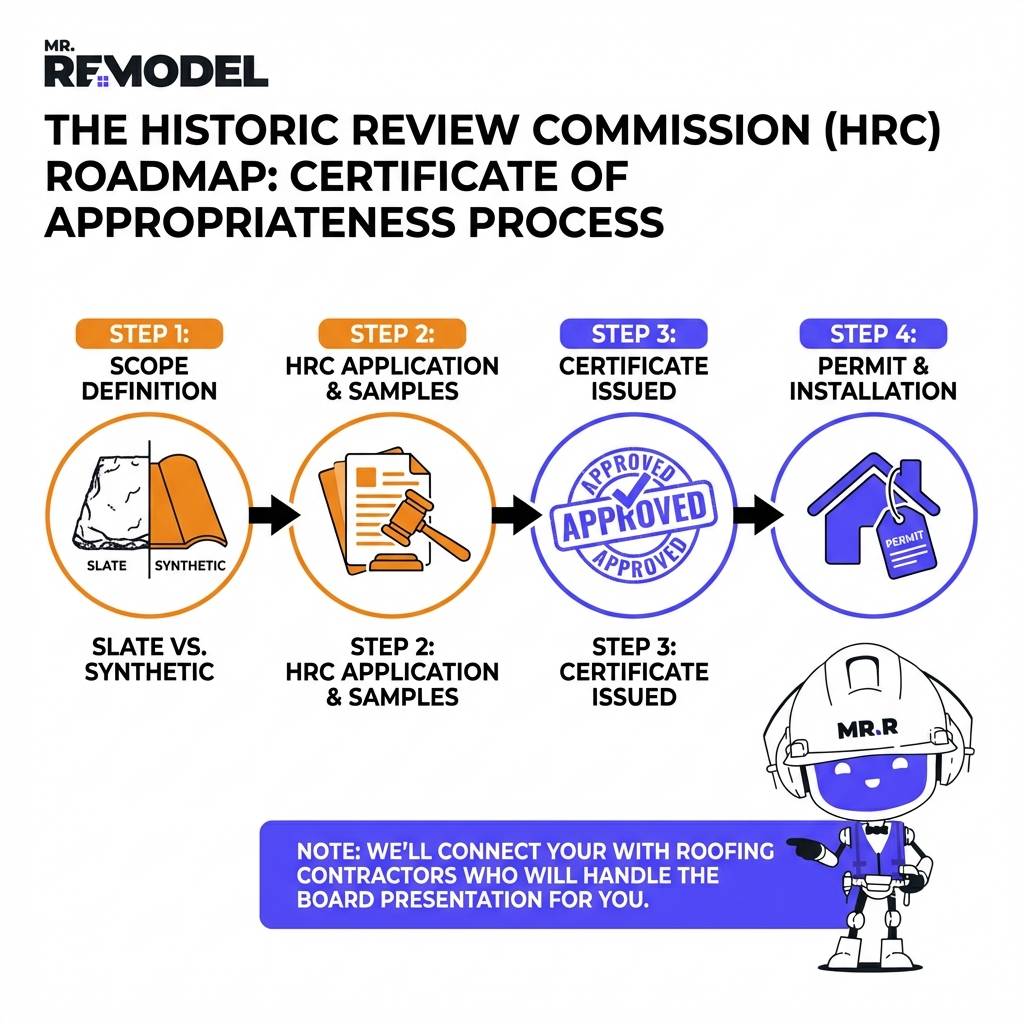
If your property is located in a designated city historic district, you have an extra layer of regulation to follow. The Pittsburgh Historic Review Commission requires a Certificate of Appropriateness for any exterior work that is visible from the street.
This regulation includes:
- Changing the color of your roof shingles.
- Switching from slate to asphalt or synthetic materials.
- Altering the shape or pitch of the roofline.
Failing to obtain this certificate can result in a Stop Work order and costly fines. A contractor familiar with local preservation rules will handle the application process for you. This ensures the design meets historical standards before work begins.
Grants and Loans for Repairs
The cost of roofing work can be daunting. Fortunately, there are programs designed to help Pittsburgh residents maintain their homes. The Whole-Home Repairs Program and the URA Homeowner Assistance Program offer financial aid to eligible homeowners.
These programs can provide grants or low-interest loans up to $35,000 to address habitability concerns. Leaking roofs are a primary qualifier for these funds. Validating your eligibility for these programs can make a high-quality restoration much more affordable.
Neighborhood Targeting: The Right Approach for Your Home
Different neighborhoods in Pittsburgh face different roofing challenges based on the age and style of the homes. Understanding your specific context helps you choose the right contractor.
North Side and South Side (15212 & 15210)
These areas are densely populated with historic Victorian and row homes. The primary issues here are box gutters and slate restoration. The roofs are often steep and difficult to access.
Homeowners in these zip codes should prioritize contractors who have the safety gear to walk steep slopes. This includes specialized harnesses and ropes. The focus here should be on preservation. You must ensure the contractor knows how to line built-in gutters to prevent water damage to the intricate cornices typical of these homes.
Penn Hills and Post-War Brick Homes (15235)
In Penn Hills and the eastern suburbs, post-war brick homes are more common. These houses often suffer from poor ventilation and insulation. This combination leads to chronic ice dams.
For these homes, a ventilation strategy is most effective. This involves air sealing the attic floor and installing ridge vents. These steps ensure the roof deck stays cold which prevents the snow from melting unevenly. While the roofing material is usually asphalt, the success of the project depends entirely on the ventilation system beneath it.
The Hidden Risks of Hiring Generalists
When you hire a general contractor for a specialized roof, you risk more than just poor aesthetics. You risk structural damage and financial liability.
Improper Flashing Techniques
Chimneys in Pittsburgh are often old masonry structures. They require step flashing and counter flashing cut directly into the mortar joints. Generalists often rely on caulk or roof cement to seal these areas. Caulk eventually dries out and cracks. This leads to leaks that can rot your roof deck and damage your ceilings.
Lack of Specialized Insurance
Roofing is dangerous work. This is doubly true for the steep pitches found in Western PA. General handymen often carry general liability insurance but lack specific workers' compensation for roofing activities.
If a worker falls off your roof and does not have the proper coverage, you could be liable for their medical bills. Always verify that your roofing company carries insurance specifically for roofing operations.
Frequently Asked Questions
Do I really need a permit for a roof replacement in Pittsburgh?
Yes. The Pittsburgh Department of Permits, Licenses, and Inspections requires a permit for re-roofing projects. This ensures the work meets safety codes and zoning requirements. Mr. Remodel partners are vetted to ensure they handle all necessary paperwork and compliance issues for you so you do not have to worry about fines.
How much does a slate roof repair cost compared to replacement?
Repair costs vary significantly based on the extent of the damage. Minor slate repairs are generally more affordable than a full replacement. However, if the slate is deteriorating across the entire surface, a synthetic replacement might be more cost-effective in the long run. Mr. Remodel data indicates that many homeowners find synthetic slate to be a balanced option between cost and aesthetics.
Can you tarp a steep roof in an emergency?
Yes, but it requires specialized safety equipment. Many general roofers will not walk a steep Pittsburgh roof in wet conditions. You need a contractor equipped with proper harnesses and ropes to safely install an emergency tarp. Mr. Remodel can help connect you with professionals who are prepared for high-urgency steep slope work.
Secure Your Historic Home Today
Maintaining a home in Pittsburgh requires respect for its history and preparation for its climate. Whether you are dealing with the intricate box gutters of the North Side or fighting ice dams in the East End, you need a specialist who understands the local architecture.
Do not settle for a generic fix that ignores the unique needs of your property. Let Mr. Remodel connect you with vetted local contractors who specialize in slate, metal, and historic restoration. Protect your home with the expertise it deserves.