1-855-QUOTEMR

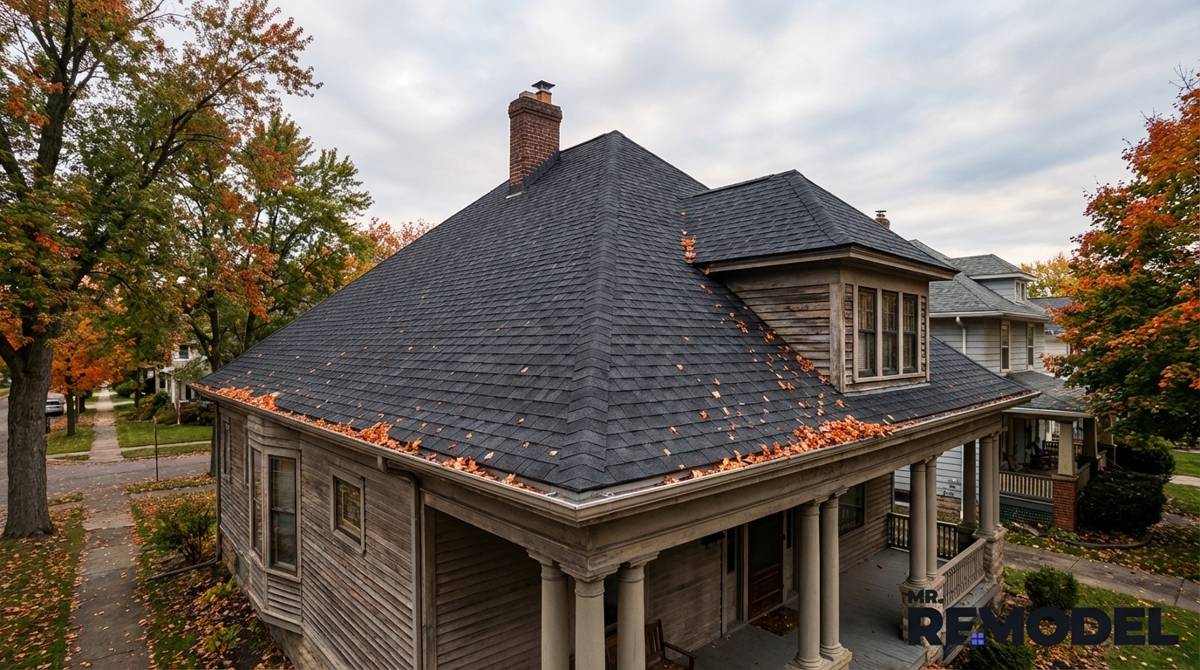
Table of Contents [hide]
Who This Is For
This guide assists Cleveland homeowners, especially in historic districts like Cleveland Heights and Shaker Heights, who are dealing with roof leaks or ice dams. It is designed for residents deciding between slate repair and synthetic replacement. It also helps homeowners in areas like Parma understand ventilation upgrades and Ohio building codes regarding ice barriers.
Key Takeaways
- Ice Dam Code: Ohio Residential Code requires ice barriers to extend at least 24 inches inside the exterior wall line to prevent leaks from Lake Effect snow.
- Historic Options: Homeowners in Shaker Heights can often use synthetic slate to satisfy Architectural Board of Review guidelines while lowering maintenance costs.
- Winter Installation: Professional roofers can install year round by hand sealing shingles when temperatures drop below 40 degrees.
- Permit Rules: Replacing a roof in Cleveland always requires a permit to ensure the decking and ice shields meet current safety standards.
The harsh reality of Northeast Ohio weather dictates that your roof is the primary defense system for your home. When you begin your search for roofing companies in Cleveland, you are likely motivated by the threat of Lake Effect snow or the frustration of existing leaks. A standard shingle replacement that works in southern Ohio often fails here because it cannot handle the 30 plus inches of snow we see annually.
You need a contractor who understands the specific physics of ice dams and proper attic ventilation. You also need someone who can navigate the strict preservation rules in our historic neighborhoods.
Mr. Remodel data suggests that many homeowners are unaware that their current roof likely violates modern ice barrier codes. You deserve a solution that protects your investment against the next polar vortex.
The Ice Defense System: Meeting Ohio Code
Ice dams are the number one cause of winter roofing failures in Cleveland. They occur when heat escapes your attic and melts the snow on the roof. This water runs down to the cold eaves and refreezes. This creates a dam that forces water to back up under your shingles and into your walls.
The 24 Inch Rule
Many contractors promise to install an ice and water shield. However, the Ohio Residential Code is very specific about how this must be done. Section R905.1.2 states that in areas where the average January temperature is below 25 degrees, the ice barrier must extend from the eave edge to a point at least 24 inches inside the exterior wall line.
This is a critical distinction. Simply rolling a three foot strip of ice guard along the gutter is often not enough to meet this 24 inch interior requirement, especially on homes with wide overhangs. You must ensure your contractor calculates this distance correctly to prevent water intrusion.
Historic Homes: Slate vs. Synthetic
Neighborhoods like Cleveland Heights and Shaker Heights are famous for their beautiful century homes. Many of these properties still feature original slate or tile roofs.
The Repair vs. Replace Dilemma
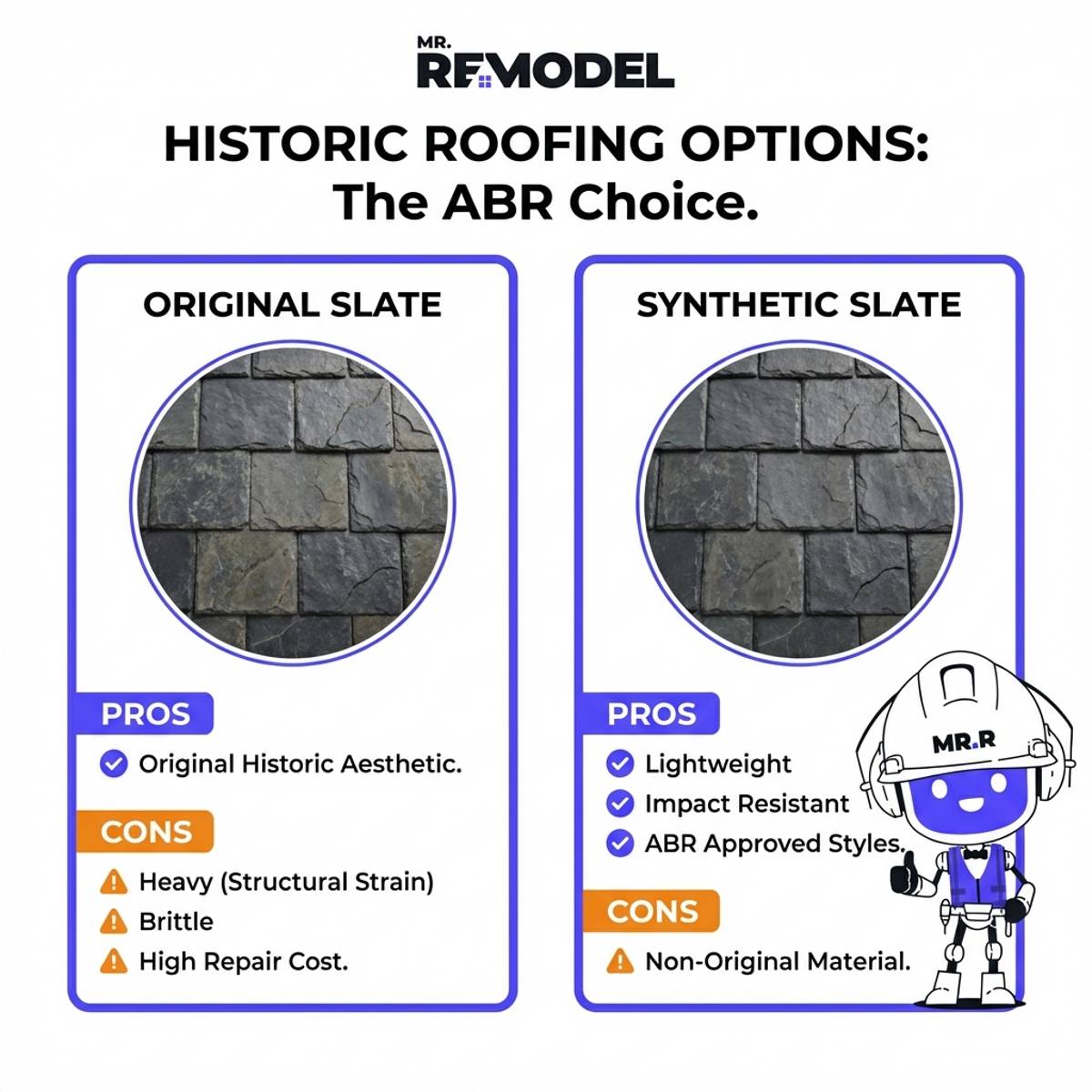
If you live in a historic district you face a tough choice when your roof fails. Original slate is beautiful but expensive to repair. It is also heavy. If the nails holding the slate are rusting, you might be facing a total failure known as nail sickness.
The modern solution is often synthetic slate. Manufacturers produce composite tiles that mimic the look of natural stone but are lighter and more durable.
Architectural Board of Review (ABR)
In these historic zones you cannot just rip off a slate roof and install asphalt shingles. You typically need approval from the local Architectural Board of Review.
Mr. Remodel can connect you with contractors who specialize in presenting synthetic samples to these boards. They handle the permit approval process to ensure your new roof meets the aesthetic standards of the community.
Ventilation Upgrades in Parma & Strongsville
In post war suburbs like Parma and Strongsville, the housing stock consists largely of bungalows and ranch homes. These older attics often suffer from poor intake ventilation.
The Balanced System
A new roof is useless if your attic cannot breathe. Without proper airflow, heat builds up in the summer and cooks your shingles from the bottom up. In the winter, moisture gets trapped and causes mold.
A complete roofing system for these homes must include:
- Intake Vents: Soffit vents that pull fresh cool air in.
- Exhaust Vents: Ridge vents that let hot moist air out.
Upgrading your ventilation during a roof replacement is the most cost effective way to lower your energy bills and extend the life of your shingles.
Winter Installation Protocols
Homeowners often ask if they have to wait until spring to replace a leaking roof. The answer is no, but specific protocols must be followed.
Hand Sealing
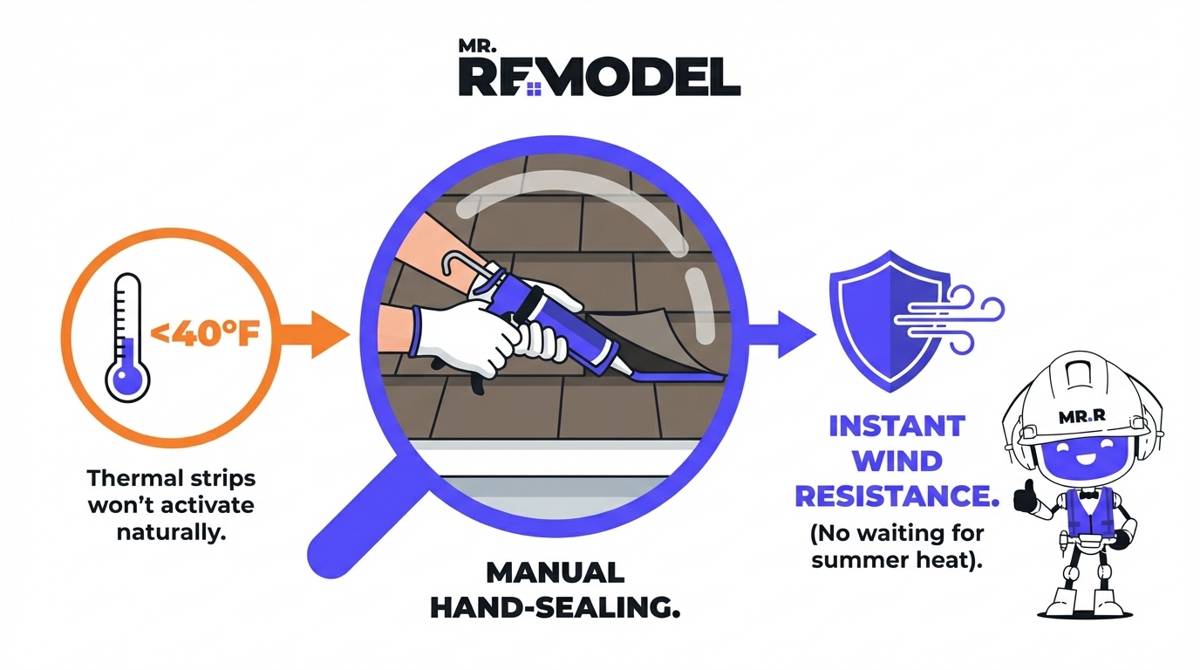
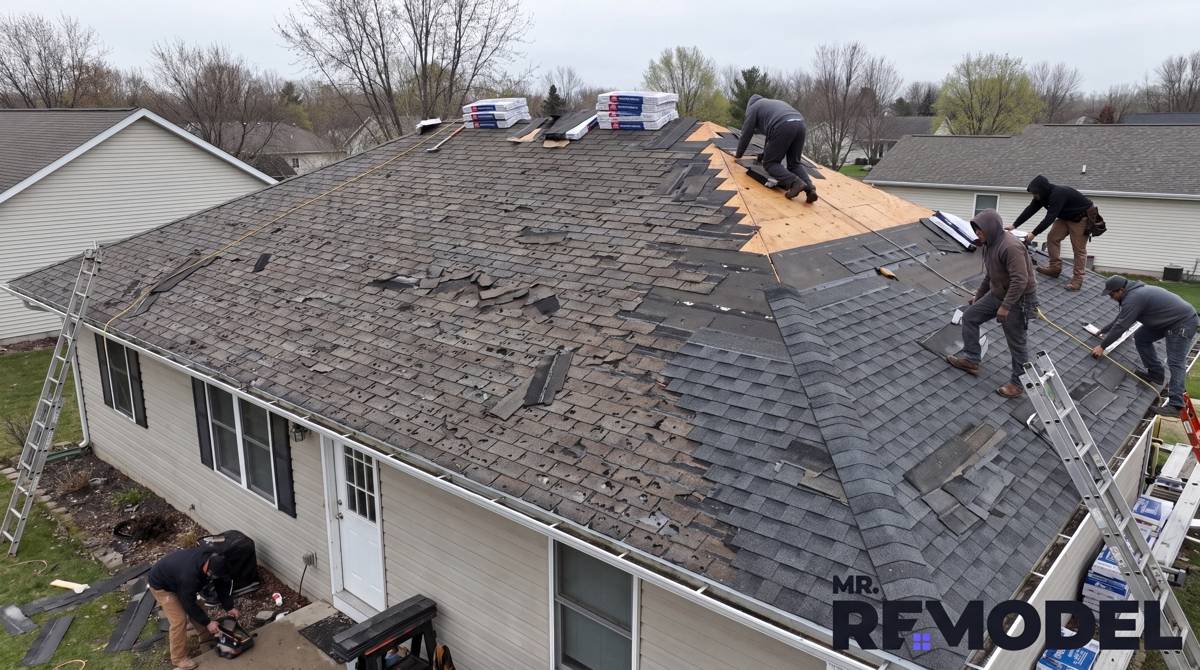
Asphalt shingles have a strip of sealant that melts in the sun to bond the shingles together. In Cleveland winters, it is too cold for this thermal sealing to happen naturally. According to National Roofing Contractors Association guidelines, shingles installed in temperatures below 40 degrees should be hand sealed with roofing cement.
Professional crews also adjust their nail guns to ensure they do not blow through brittle shingles. If you have an active leak, you cannot afford to wait. Mr. Remodel can connect you with crews experienced in these cold weather techniques.
Frequently Asked Questions
Is an ice guard required for roofs in Cleveland?
Yes. Under the Ohio Residential Code, homes in our climate zone must have an ice barrier. It is legally required to extend from the edge of the eave to a point at least 24 inches inside the exterior wall line. This prevents water from backing up into your home during freeze and thaw cycles.
Do I need a permit to replace my roof in Cleveland?
Yes. Both the City of Cleveland and suburbs like Cleveland Heights require building permits for roof replacements. This is especially true when stripping the roof down to the wood deck. In historic districts you may also need design approval from the Architectural Board of Review.
Can I replace my roof during a Cleveland winter?
Yes. Professional roofers install roofs year round. When temperatures drop below 40 degrees, crews must hand seal the shingles because the sun is not strong enough to activate the adhesive strips. Reputable roofing contractors use specific winter grade materials to ensure a watertight seal.
Should I repair or replace my historic slate roof?
This depends on the condition of the nails and the slate itself. If the nails are rusted and the slate is sliding, a full replacement is often safer. Roofing pros frequently recommend synthetic slate for historic homes. It mimics the original look to satisfy local boards but costs less than quarried stone.
Get Your Roof Ready for Winter with Mr. Remodel
Your roof is too important to leave to chance or generic advice. You need a system designed for the Lake Effect snow belt. You need ice barriers that meet the strict 24 inch interior code requirement. You need a contractor who respects the historic integrity of your home.
Whether you are restoring a slate roof in Shaker Heights or fixing ventilation in Parma, you deserve a local expert. If you’re ready to winter-proof your home, Mr. Remodel will connect you with Cleveland pros who understand ice dam prevention and historic preservation.