1-855-QUOTEMR

Table of Contents [hide]
Who This Is For
This guide is designed for Pittsburgh homeowners—specifically those in single-family residences—who need a high-impact bathroom transformation and want to move from the initial concept to the construction phase in under three weeks.
Key Takeaways
- Rapid Turnaround: Pittsburgh homeowners average an 18.5-day urgency window from lead to project start.
- Market Preference: 42% of local projects are "Complete Remodels" rather than simple cosmetic refreshes.
- Regulatory Shift: As of January 1, 2026, all renovations must comply with the updated PA Uniform Construction Code (UCC).
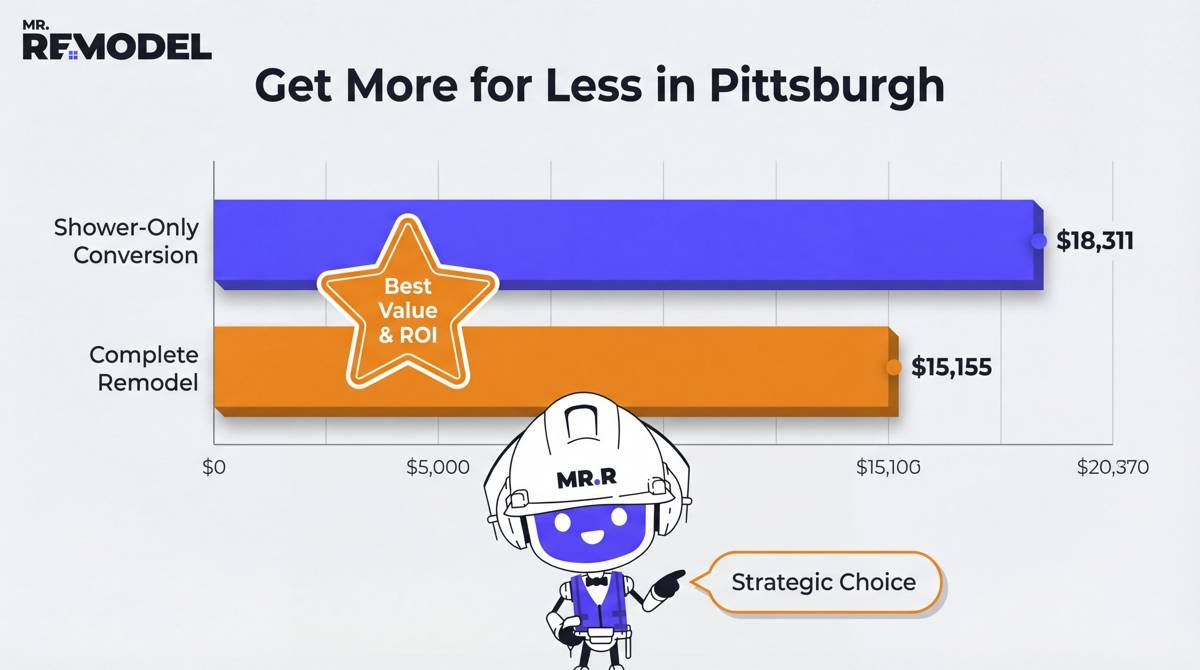
- Strategic Costing: Complete remodels in this market average $15,155, providing higher value than isolated shower conversions ($18,311).
Pittsburgh’s residential landscape is unique, dominated by mid-century single-family homes that make up 98.3% of the local remodeling market.
According to recent economic data from the University of South Alabama, while national trends show a slight cooling, bathroom renovations remain the second most popular home improvement with an average investment of $15,000.
In Pittsburgh, we aren't just seeing a demand for "facelifts." We are seeing a market primed for total structural resets to modernize aging infrastructure. This guide breaks down how to navigate the local permitting hurdles and contractor landscape to hit the "18-Day Planning Sprint."
The 18-Day Planning Sprint: Navigating Pittsburgh’s Market Velocity
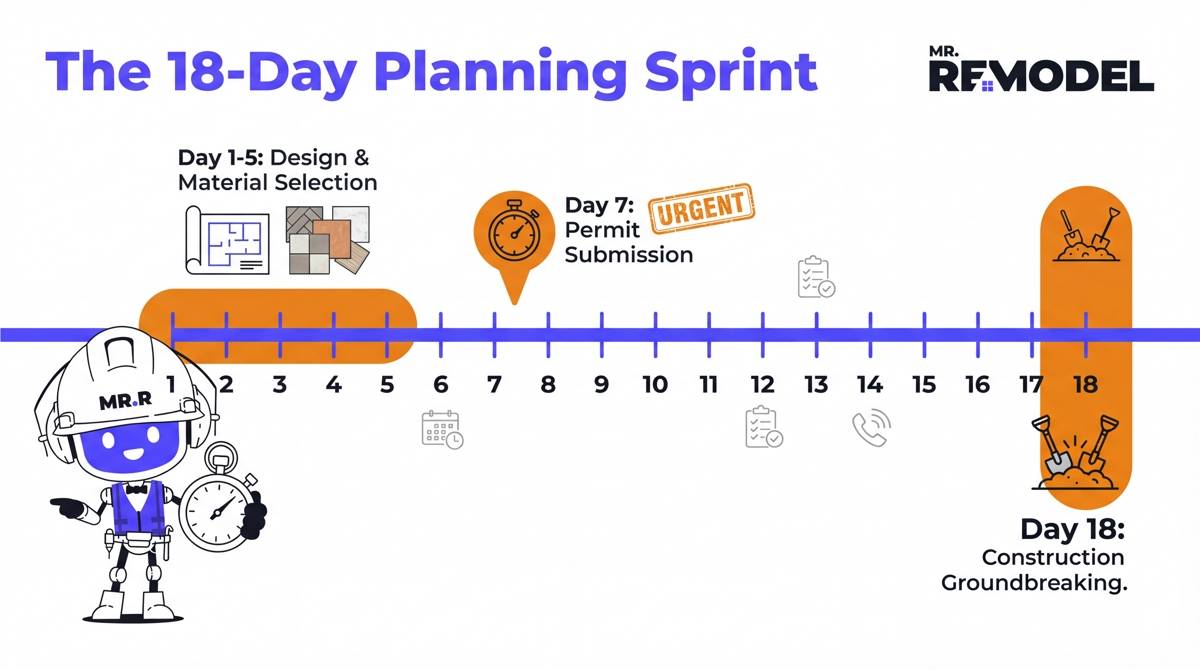
Mr. Remodel data indicates that the average Pittsburgh homeowner expects a project to start within 18.48 days of their initial inquiry. This "Project Velocity" is significantly faster than the national average, requiring a highly coordinated approach between the homeowner and the contractor.
Mastering the Timeline
To hit the 18-day mark, your planning must be precise. The City of Pittsburgh Department of Permits, Licenses, and Inspections (PLI) has a Service Level Agreement (SLA) for Residential Permit Reviews of 15 business days for initial submissions.
Because the permit review accounts for roughly 10 to 12 of your 18 days, the "Sprint" requires you to have your design finalized and materials selected within the first week. Waiting until the permit is issued to pick your tile will result in delays that miss the local urgency window.
Prioritizing Single-Family Infrastructure
Most Pittsburgh homes utilize cast-iron piping or older electrical systems. When hiring bathroom remodel contractors in Pittsburgh, ensure they specialize in "Complete Remodels." Mr. Remodel data shows 42% of local leads prefer a full gut-and-rebuild.
Full remodels allow for the complete replacement of aging plumbing, which is often more cost-effective than attempting to "patch" new fixtures into 70-year-old pipes. This proactive approach prevents future leaks and ensures your home meets the newest safety standards.
Understanding Costs and ROI in the 2026 Market
The financial landscape of remodeling in Pittsburgh has shifted. Interestingly, Mr. Remodel data reveals that a "Complete Remodel" currently averages $15,155, while a specific "Bathtub to Shower" conversion averages $18,311.
Regional Cost Breakdown
|
Project Type |
Average Cost (Pittsburgh) |
Estimated ROI |
|
Complete Remodel |
$15,155 |
65% to 75% |
|
Shower Upgrade |
$18,311 |
55% to 60% |
|
Powder Room Refresh |
$8,000 to $12,000 |
70% to 80% |
The higher cost for shower-only conversions is often due to the specialized plumbing and waterproofing required to retrofit old bathtub footprints. By opting for a complete remodel, you often achieve better economies of scale with your labor and materials.
Maximizing Your Investment
According to the 2026 Cost vs. Value trends, bathroom renovations continue to offer one of the highest returns on investment for interior projects. In Pittsburgh’s competitive real estate market, a modernized primary bath is a top priority for buyers.
To maximize ROI, focus on "invisible" value. This includes upgrading to energy-efficient fixtures and ensuring your contractor pulls all necessary permits to prove the work was done to code during a future home inspection.
|
Pro Tip: If you're ready to see how these numbers apply to your specific home, Mr. Remodel provides free quotes and connects you with pre-vetted local contractors who understand the 18-day sprint. |
Why a Partial Bathroom Remodel Can Cost More Than a Full Renovation
At first glance, a partial bathroom remodel should cost less than a full renovation. However, in many Pittsburgh projects, homeowners are surprised to see the opposite.
| Project Type | Typical Focus | Cost Drivers | Why It Can Be Expensive |
|---|---|---|---|
| Partial Remodel | Shower / Tub | Waterproofing, tile, plumbing | High complexity concentrated in one area |
| Full Remodel | Entire bathroom | Materials + labor spread out | More balanced cost distribution |
Navigating 2026 Building Codes and Permits
As of January 1, 2026, Pennsylvania has officially transitioned to the updated Uniform Construction Code (UCC). This update introduces stricter requirements for structural integrity and energy conservation that your contractor must follow.
Plumbing Regulations in Allegheny County
For any project involving a "Bathtub to Shower" conversion, you must adhere to the Allegheny County Health Department (ACHD) Plumbing Program. Article XV of the ACHD rules requires:
- Plan Submission: Detailed plumbing plans must be submitted before work begins.
- Licensed Professionals: Only ACHD-registered master plumbers can pull permits and perform the work.
- Final Inspection: A health department inspector must sign off on the work before walls are closed.
Electrical and Structural Updates
The 2021 International Code (now enforced via the 2026 PA UCC) requires specific safety upgrades. This includes Surge Protective Devices (SPDs) at the service panel and updated requirements for emergency escape paths if your remodel involves changing the bathroom's footprint or windows.
Frequently Asked Questions
Do I really need a permit for a bathroom remodel in Pittsburgh?
Yes. Any project that involves moving plumbing, changing electrical circuits, or altering structural walls requires a residential building permit from the City of Pittsburgh or your specific Allegheny County municipality. Failure to obtain permits can lead to fines and complications when you try to sell your home.
How long does the permit process take in 2026?
The City of Pittsburgh PLI currently aims for a 15-business-day turnaround for initial residential reviews. However, the Allegheny County Health Department plumbing reviews can vary. It is best to plan for at least three weeks for all approvals to clear.
Why is a "Complete Remodel" cheaper than a "Shower Upgrade" in your data?
This is a unique trend in the Pittsburgh market. Shower conversions often require intensive plumbing retrofitting within a confined space. A "Complete Remodel" allows the contractor to clear the space entirely, making it easier to install new systems and often resulting in lower specialized labor costs per square foot.
How can I find a contractor who can meet the 18-day planning window?
Platforms like Mr. Remodel help by matching you with local Pittsburgh contractors who are experienced in high-velocity projects. These contractors are familiar with the 2026 PA UCC codes and the specific permitting requirements of Allegheny County.
What is the ROI for a bathroom remodel in a single-family home?
In the current market, a mid-range bathroom remodel in a single-family home typically yields a 65% to 80% return on investment. This value is particularly high in older Pittsburgh neighborhoods, where updated en-suite bathrooms are a rare and highly desired feature for buyers.
Start Your Pittsburgh Bathroom Transformation
Modernizing a Pittsburgh home requires a balance of speed and regulatory precision. With 98% of local projects occurring in single-family homes and an average urgency of 18 days, the key to success is early planning and professional guidance.
By understanding the 2026 PA UCC updates and focusing on a "Complete Remodel" strategy, you can maximize both your home’s functionality and its resale value.
Ready to start your 18-day sprint? Don't navigate the complex world of Pittsburgh permits and contractor scheduling alone. Mr. Remodel offers free, no-obligation quotes and connects you with top-tier bathroom remodel contractors in Pittsburgh.