1-855-QUOTEMR

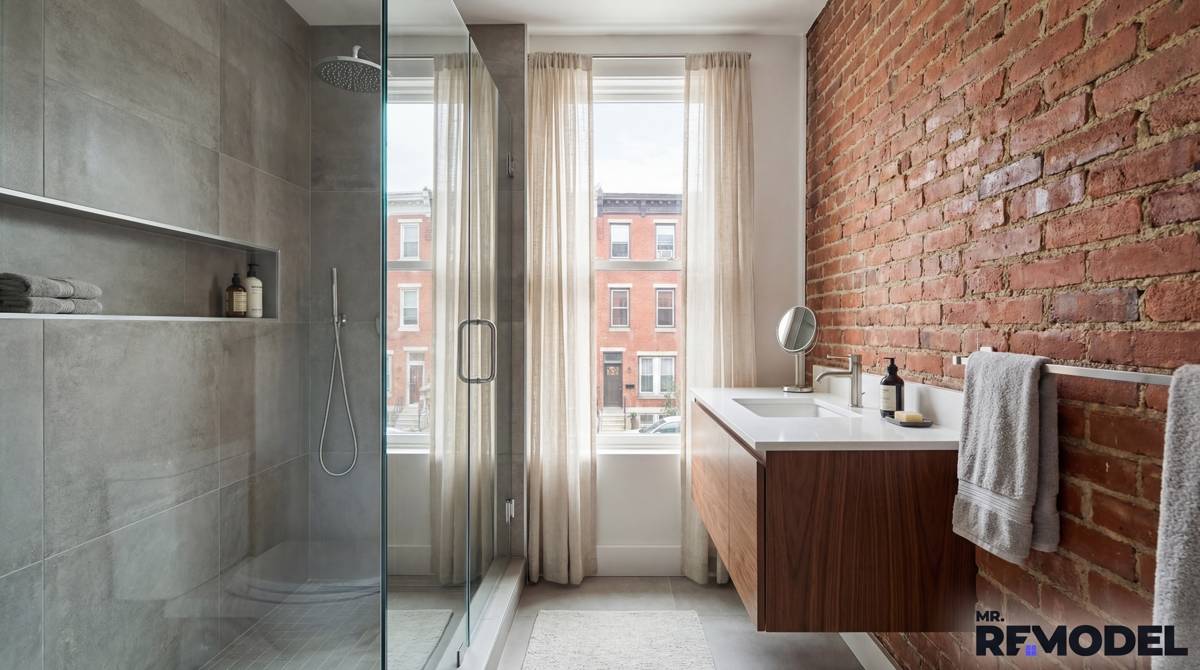
Table of Contents [hide]
Who This Is For…
This guide is designed for Philadelphia homeowners, particularly those in historic row homes or Trinities, who need to modernize aging infrastructure while navigating the city's unique Department of Licenses and Inspections (L&I) requirements.
Key Takeaways
- Speed is Possible: Philadelphia’s EZ Permit process allows for rapid approval of bathroom alterations without the need for full architectural plans.
- Infrastructure Matters: Older Philly homes often require upgrades from galvanized plumbing and 100-amp electrical panels to meet the 2024 plumbing code.
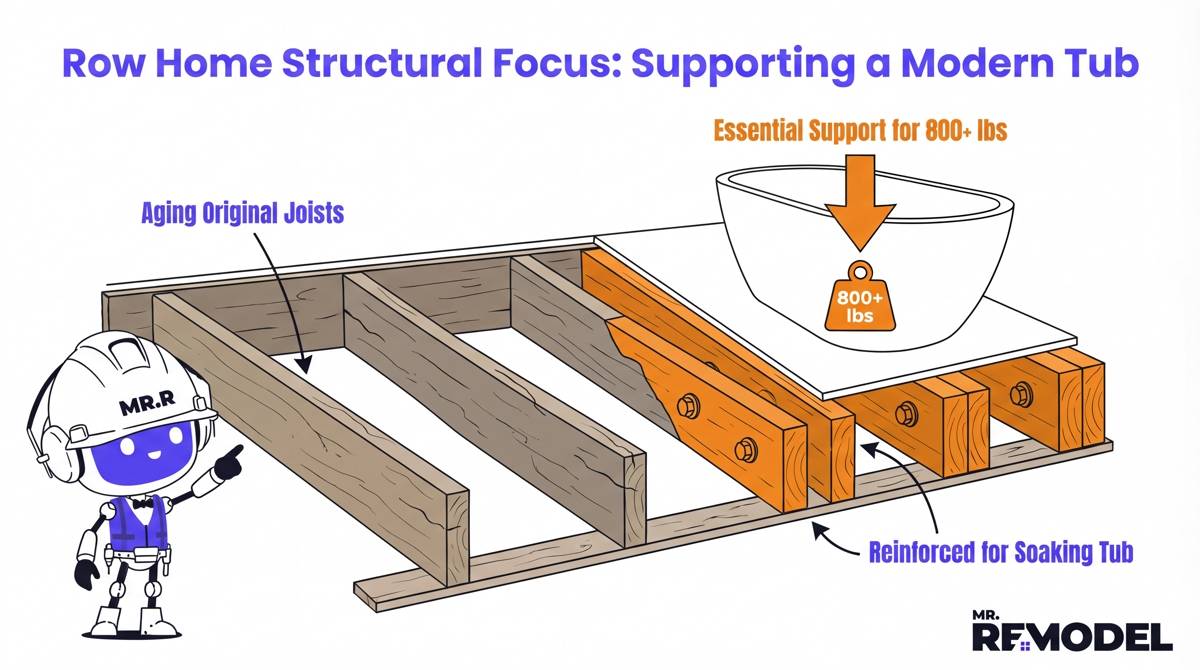
- Row Home Focus: Structural reinforcement is critical in narrow row homes when adding heavy modern fixtures like soaking tubs to aging floor joists.
- Timeline: Effective coordination with local material lead times is the secret to meeting the 16-day project start window.
Modernizing a bathroom in Philadelphia involves more than just picking out new tile or a trendy vanity. While 95% of national remodeling advice focuses on standard single-family homes, Philadelphia’s dense stock of historic row homes presents significant technical challenges.
Recent data from Mr. Remodel indicates that gut renovations are the primary demand in the city. Homeowners are increasingly choosing to replace entire underlying systems rather than performing surface-level cosmetic updates.
According to the University of Pennsylvania’s Rowhouse City Project, these structures often feature narrow 16-foot footprints and stacked plumbing configurations. These layouts limit your ability to move fixtures without major structural or drainage adjustments.
Navigating the Philadelphia EZ Permit Process
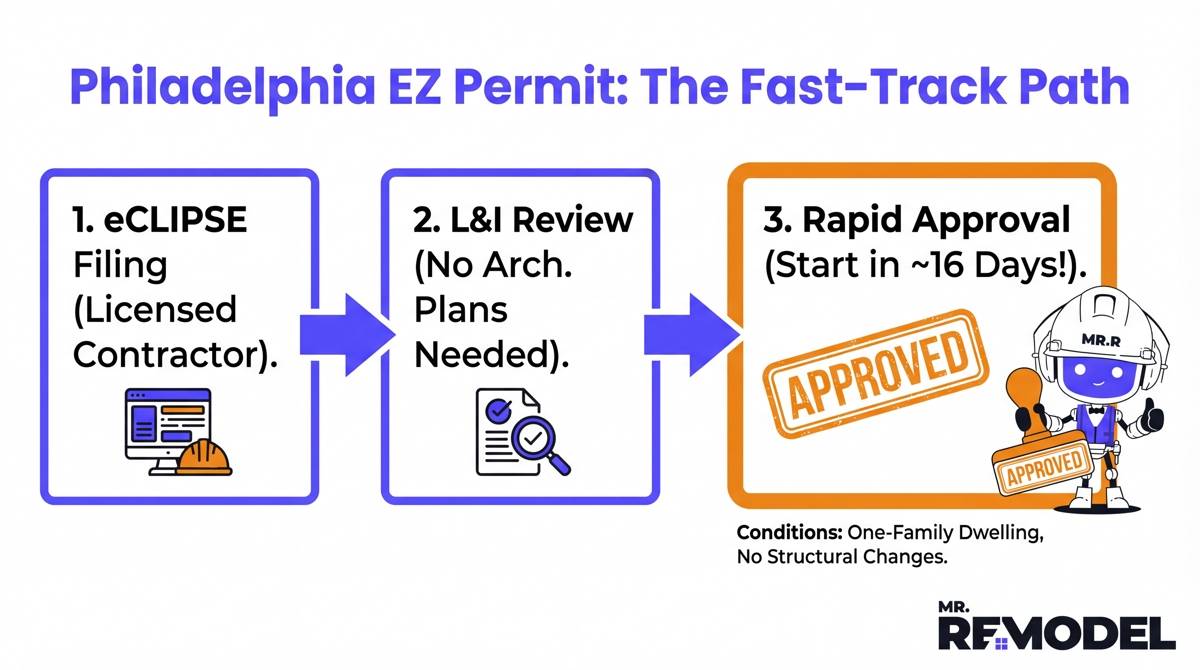
One of the biggest hurdles for Philly homeowners is the permitting process. Fortunately, the City of Philadelphia offers an EZ Permit for Bathroom and Kitchen Alterations.
This specific permit allows you to skip the lengthy architectural review process for certain projects. To qualify, your renovation must be limited to an existing one-family dwelling and cannot include the relocation of load-bearing walls.
Using the city's eCLIPSE filing system is essential for hitting a fast-track timeline. Licensed contractors who are familiar with this digital portal can often secure approvals much faster than homeowners attempting a manual submission.
EZ Permit Limitations and Conditions
- Occupancy: The permit only applies to buildings used solely as one-family dwellings.
- Structural Work: You cannot remove or relocate any load-bearing components of the structure under this specific permit.
- Historic Registry: If your home is on the Philadelphia Register of Historic Places, any work impacting the exterior will require additional approvals.
- Plumbing Requirements: The work must be performed by a Philadelphia-licensed plumbing contractor to ensure code compliance.
Understanding the 2024 Philadelphia Plumbing Code
The 2018 Philadelphia Plumbing Code, with updates effective through 2024, sets strict standards for drainage and venting. This is particularly important in row homes where space for new venting is limited.
In Philadelphia, every horizontal soil or waste pipe serving two or more fixtures must have a vent of the same size as the branch. This prevents siphoning and ensures that sewer gases do not enter your living space.
Common Code Requirements for Philly Bathrooms
|
Fixture Type |
Minimum Trap Size |
Fixture Unit Value |
|
Bathroom Group (Tub/Shower, Toilet, Lavatory) |
Varies |
6 Units |
|
Standard Bathtub |
1.5 Inches |
2 Units |
|
Walk-In Shower |
2 Inches |
2 Units |
|
Water Closet (Toilet) |
3 Inches |
3 Units |
These values are used to calculate the load on your home's main drainage stack. If you are adding a high-flow rain shower or a second bathroom, your existing 3-inch stack might need to be upgraded to 4 inches.
Structural Integrity in Historic Row Homes
Philadelphia row homes often share party walls with neighbors. The Community Legal Services Rowhouse Protection Project emphasizes the importance of licensed contractors when working near these shared walls.
Improperly cutting into floor joists to install new plumbing can compromise the structural integrity of your home and your neighbor's home. Older joists may also require sistering or reinforcement to support the weight of modern cast-iron or stone tubs.
If you are planning a high-end renovation, you must account for the weight of the water. A full soaking tub can weigh over 800 pounds. This is a significant load for a structure built in the early 1900s.
If you’re ready to transform your Philadelphia bathroom, click here to get your free, no-obligation quote today and start your project in as little as 16 days.
Estimated Costs for Philadelphia Bathroom Remodels
The cost of a bathroom remodel in Philadelphia is influenced by the city's high labor rates and the complexity of older buildings. On average, homeowners in the city spend between $11,388 and $15,586 for a mid-range full remodel.
If you are pursuing a luxury renovation in a primary suite, costs can easily exceed $45,000. This is often due to the need for electrical panel upgrades and complete plumbing line replacements.
Philadelphia Cost Breakdown by Project Scope
- Minor Cosmetic Update: $2,710 to $8,410.
- Mid-Range Full Remodel: $12,000 to $28,000.
- Luxury/High-End Renovation: $45,000 to $80,000+.
- Rough-In Plumbing Only: Average of $6,000.
Material choices also play a role. Custom tile work in a walk-in shower averages around $7,592 in the Philadelphia market. Standard prefab tub-and-shower combos are significantly more affordable, averaging closer to $1,590.
Achieving the 16-Day Start Timeline
Philadelphia homeowners are known for their high urgency. Meeting a 16-day start window requires a proactive approach to material selection and permitting.
You should select your vanity, tile, and fixtures before the permit is even filed. Relying on local Philadelphia suppliers can help avoid the long lead times associated with national shipping.
Once the eCLIPSE application is submitted by your contractor, the EZ status of the permit allows for a quick turnaround. This efficiency is what allows top-tier contractors to move from initial consultation to demolition in just over two weeks.
Philadelphia Bathroom Remodel FAQ
Do I need a permit to replace a bathroom vanity in Philly?
If you are only replacing the vanity and keeping the faucet in the same location, you generally do not need a plumbing permit. However, if you are moving the plumbing lines or changing the drainage, an EZ Permit is required.
How do I know if my row home can support a soaking tub?
You should have a licensed contractor inspect your floor joists. Many Philadelphia row homes have 2x8 or 2x10 joists that may need reinforcement to safely support the weight of a filled tub and a person.
What is the EZ Permit for bathroom alterations?
This is a streamlined permit process from Philadelphia L&I. It allows for interior alterations in one-family dwellings without the need to submit full architectural plans, provided no structural changes are made.
How can I find a contractor who knows Philadelphia’s specific codes?
Platforms like Mr. Remodel help by matching you with local contractors who have verified experience in the Philadelphia market. These pros are familiar with L&I inspectors and the 2024 plumbing code updates.
Can I do the plumbing myself in my Philadelphia home?
No. The Philadelphia Plumbing Code requires that all plumbing work, except for very minor repairs, be performed by a licensed Philadelphia Master Plumber. This ensures the safety of the city's water and sewer systems.
What is the average square foot cost for a Philly remodel?
Homeowners in Philadelphia typically pay around $285 per square foot for a full bathroom remodel. This price includes both materials and the professional labor required for historic home updates.
Start Your Philadelphia Bathroom Transformation
Successfully remodeling a bathroom in Philadelphia requires a blend of historic preservation knowledge and modern technical expertise. From navigating the EZ Permit standards to reinforcing aging row home joists, every detail matters for a long-lasting result.
By focusing on the unique requirements of the 2024 plumbing code and leveraging fast-track permitting through eCLIPSE, you can achieve a high-quality renovation without the typical delays.
Mr. Remodel is here to simplify the process for you. We provide free quotes and connect you with the best local contractors in Philadelphia who understand the specific needs of row home owners. Don’t let permits and paperwork hold you back from the bathroom you deserve.