1-855-QUOTEMR

Table of Contents [hide]
Who This Is For
This guide is designed for homeowners planning a bathroom renovation who need clear, data-backed advice on budgeting and loan options. Whether you are looking for low-interest government programs or flexible contractor financing, this article provides the financial roadmap to start your project.
Key Takeaways
- Average Investment: Most homeowners should prepare for a financing need between $15,000 and $20,000 based on current market trends.
- Loan Diversity: Options range from secured Home Equity Lines of Credit (HELOCs) to unsecured personal loans and specialized government-backed Title I loans.
- Strategic Planning: Converting a bathtub to a shower is currently the highest-value upgrade, averaging over $18,300.
- Credit Impact: Your credit score remains the primary factor in determining your APR and total cost of borrowing.
Deciding to upgrade your bathroom is an investment in both your daily comfort and your home’s long-term resale value. However, the gap between a dream design and a finished space is often a financial one.
According to research from the BYU Marriott School of Business, strategic home remodeling acts as a sound financial investment when the project costs are aligned with the projected increase in home equity. Understanding your funding options early prevents mid-project budget fatigue.
Understanding the Real Cost of a Bathroom Remodel
Before applying for a loan, you must understand the current market benchmarks. Many generic online calculators provide broad ranges that don’t reflect the reality of modern labor and material costs.
At Mr. Remodel, our internal data shows that the actual average customer cost for a bathroom renovation is $16,248.91. This figure serves as a critical baseline for homeowners seeking financing.
Project Cost Breakdown by Type
The type of renovation you choose significantly impacts your target loan amount. Use the table below to see how specific upgrades compare based on Mr. Remodel’s verified project data.
Why Data Matters for Financing
Knowing that a bathtub-to-shower conversion averages $18,310.52 allows you to seek specific financing. Instead of guessing, you can apply for a loan that covers the full scope of work.
This precision prevents you from being underfunded halfway through the demolition phase. It also helps you calculate exact monthly payments rather than working with abstract percentages.
Top 4 Financing Options for Your Remodel
Choosing the right financial vehicle depends on your credit score, available home equity, and how quickly you need the funds. There is no one-size-fits-all solution for a $16,000 investment.
1. Home Equity Line of Credit (HELOC)
A HELOC is a revolving line of credit secured by your home. It often carries lower interest rates than unsecured loans because the home acts as collateral.
This is ideal for larger projects, such as the premium bathtub-to-shower conversions mentioned above. It allows you to withdraw funds as needed during different phases of the construction.
2. Personal Home Improvement Loans
These are unsecured loans, meaning you do not have to put your house up as collateral. They are typically faster to fund than equity-based options.
According to the Navy Federal Credit Union, personal loans are often the best choice for homeowners who want to avoid the long closing processes of a HELOC. They work well for mid-range shower upgrades, averaging $15,794.85.
3. HUD Title I Property Improvement Loans
If you have limited equity in your home, the U.S. Department of Housing and Urban Development (HUD) offers Title I loans. These are government-insured loans specifically for home repairs.
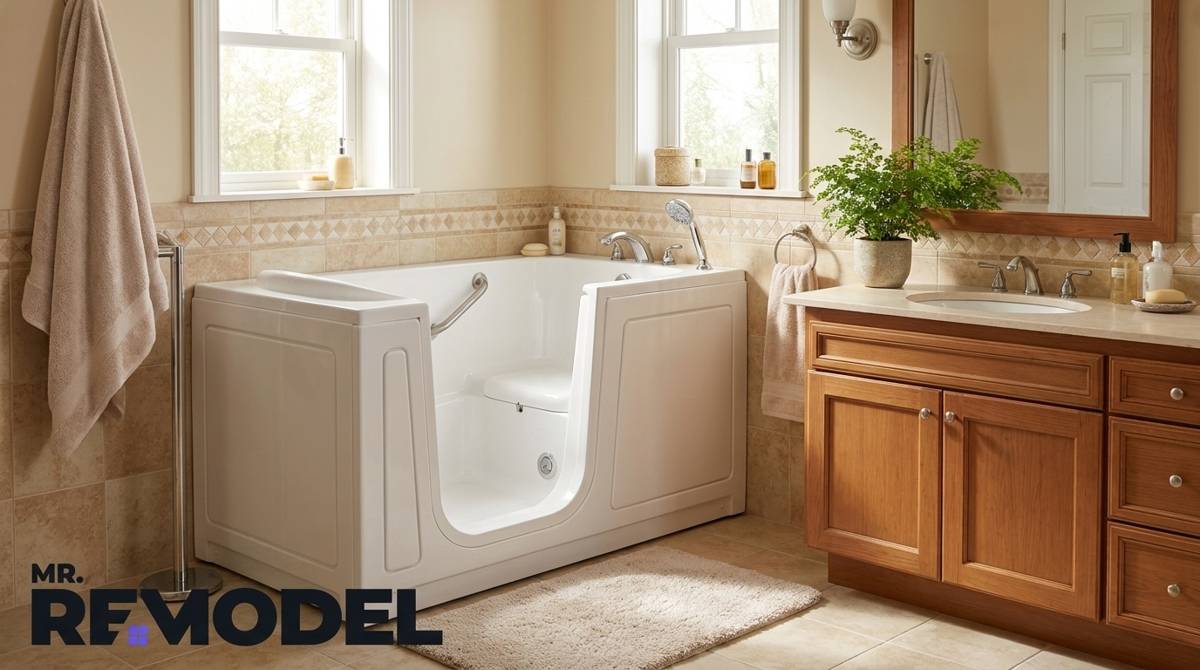
The FDIC notes that Title I loans are accessible to low-to-moderate-income borrowers. They can be used for any project that makes your home more basic and livable, including plumbing and bathroom safety upgrades.
4. Contractor Financing
Many homeowners find that financing directly through their service provider is the most convenient path. Contractor-led plans often feature promotional no-interest periods or fixed monthly payments.
Figuring out the exact cost of a remodeling project for your bathroom can be difficult. You can contact platforms like Mr. Remodel to get a free, no-obligation quote from vetted contractors around your area to match your budget and finance your project without any worries.
How Your Credit Score Influences Monthly Payments
Your credit score is the gatekeeper of your interest rate. For a standard $16,250 remodel, the difference between a 6% APR and a 12% APR can mean thousands of dollars over the life of the loan.
- Excellent Credit (720+): Access to the lowest APRs and "same-as-cash" promotional offers.
- Good Credit (660-719): Competitive rates on personal loans and most HELOC products.
- Fair Credit (580-659): May require government-backed programs like Title I or higher-interest personal loans.
Hypothetical Payment Breakdown
If you finance the average of $16,250 over a 60-month term at a 7% interest rate, your payment would be approximately $322 per month. This makes a full renovation much more manageable than a lump-sum cash payment.
Strategic Budgeting: Avoiding Hidden Costs
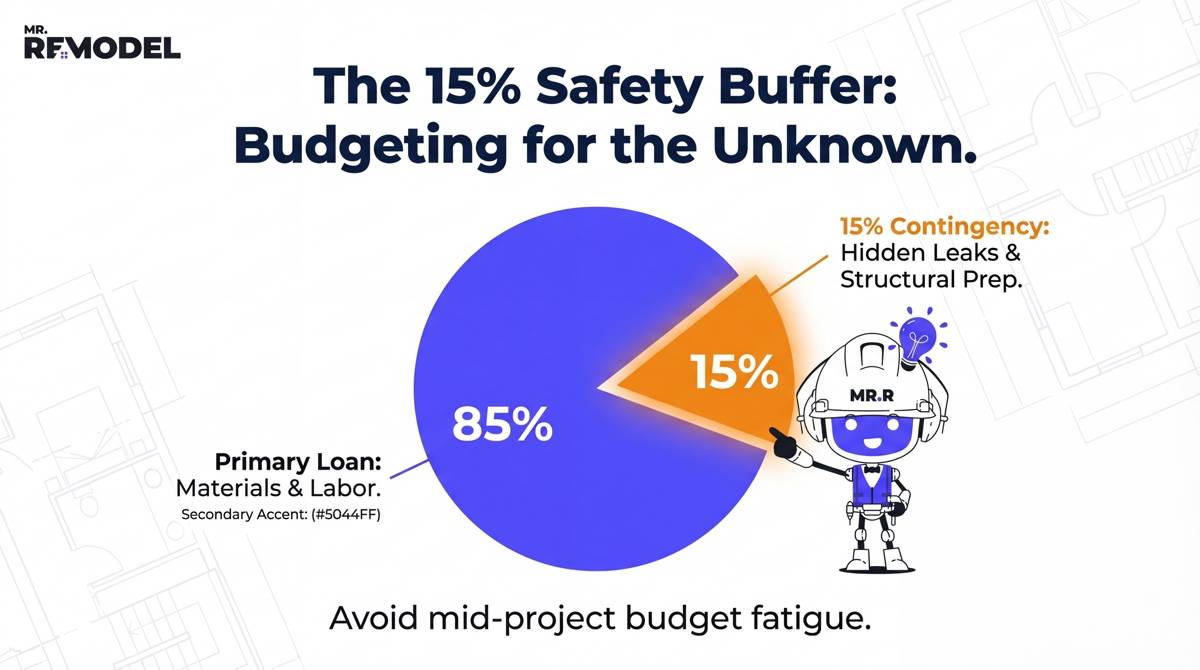
Even with a loan in hand, it is wise to set aside a contingency fund. Standard industry advice suggests adding 10% to 15% to your initial estimate for unforeseen issues.
- Old Plumbing: Hidden leaks behind walls can add $500 to $2,000 to the bill.
- Structural Repairs: If your subfloor is rotted under an old tub, expect additional labor costs.
- Permit Fees: Local building permits can range from $100 to $500, depending on your municipality.
By using Mr. Remodel's localized cost data, you can narrow down these variables. Our averages already include the typical labor and material costs seen in real-world scenarios.
Frequently Asked Questions About Bathroom Financing
What is the cheapest way to finance a bathroom remodel?
The cheapest way is typically using a Home Equity Loan or HELOC. These options offer lower interest rates because the loan is secured by your property.
Can I get a home improvement loan with bad credit?
Yes, programs like the HUD Title I loan are designed to help borrowers with less equity or lower credit scores. Some contractors also offer specialized subprime financing options.
How much should I borrow for a small bathroom?
Based on our data, even smaller shower upgrades or bathtub replacements average between $14,934 and $15,794. It is best to secure at least $15,000 to ensure quality materials.
Does a bathroom remodel increase my home value?
Generally, yes. Bathroom renovations consistently provide one of the highest returns on investment (ROI) in real estate, often recouping 60% to 70% of the cost.
How does Mr. Remodel help with the financing process?
Platforms like Mr. Remodel help by matching you with contractors who offer internal financing. We also provide the data you need to ensure your loan covers the actual market price of the work.
Securing Your Dream Bathroom
Financing a bathroom remodel is a strategic move that balances your current lifestyle needs with your home’s future value. By targeting a budget between $15,000 and $20,000, you align your project with the realistic costs seen in today’s market.
Whether you choose a HELOC for its low rates or a personal loan for its speed, having a clear data-backed plan is the key to success.
Ready to start your renovation journey? Mr. Remodel makes it easy to get professional results without the stress. Connect with top-rated local contractors and get free, accurate quotes to help you plan your financing with confidence.