1-855-QUOTEMR

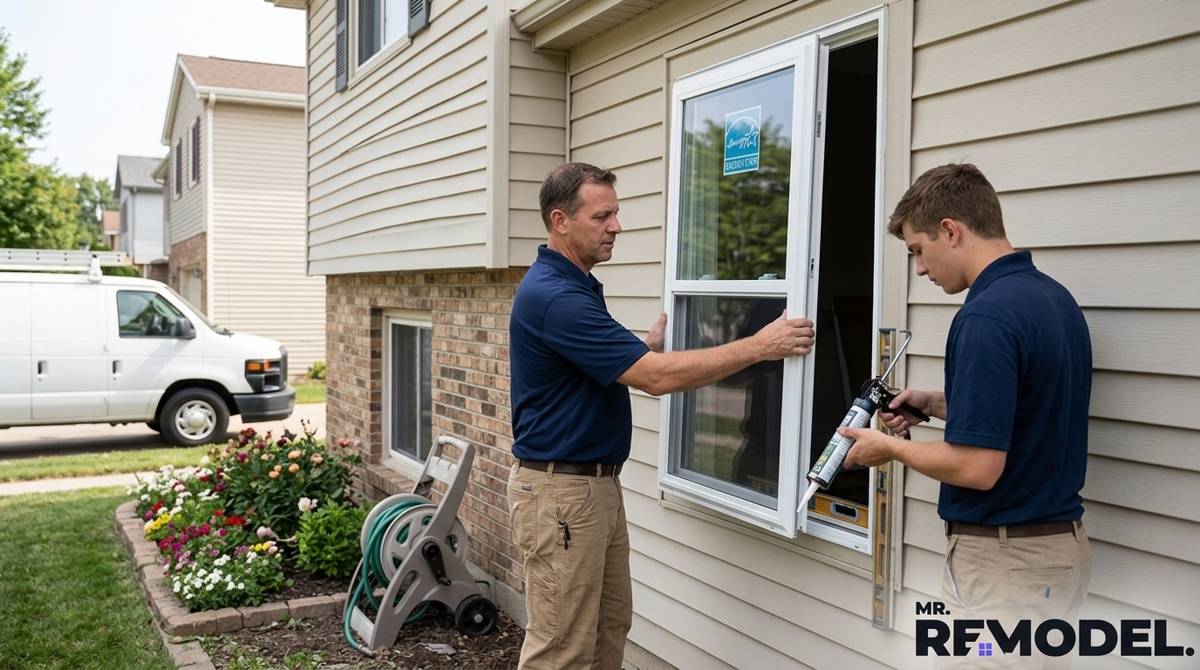
Table of Contents [hide]
Who This Is For
Homeowners researching ENERGY STAR window replacement and trying to find qualified installers who can properly install energy-efficient windows for long-term performance, comfort, and energy savings.
Key Takeaways:
- Product Certification: ENERGY STAR certification applies to windows, not installers.
- Installation Matters: Poor installation can reduce energy performance.
- Climate Zones Count: ENERGY STAR window requirements vary by region.
- Ratings Help: National Fenestration Rating Council labels help compare window performance.
- Rebates May Apply: Local rebates and incentives may help reduce project costs.
Buying energy-efficient windows is only part of the project. Energy Star window installers can help homeowners get better performance from ENERGY STAR-certified windows, but the product label does not automatically guarantee good results.
The window itself must be the right fit for your climate, home, and budget. Just as important, it must be installed correctly so air leaks, moisture problems, and poor sealing do not reduce comfort or efficiency.
What Are ENERGY STAR Windows?
ENERGY STAR windows are products that meet energy-efficiency criteria set through the federal ENERGY STAR program. The program covers residential windows, doors, and skylights, and certified products are tested and verified for performance.
According to ENERGY STAR’s Residential Windows, Doors, and Skylights program, homeowners should look for products certified for their climate zone. That matters because a window that performs well in a cold region may not be the best choice for a hot, sunny region.
How ENERGY STAR Certification Works
ENERGY STAR certification applies to the product. It does not mean every contractor who installs that product is ENERGY STAR certified.
That distinction is important. A homeowner can buy an ENERGY STAR-certified window, but if the installer measures poorly, seals incorrectly, or skips flashing details, the window may not perform as expected.
Climate Zone Requirements
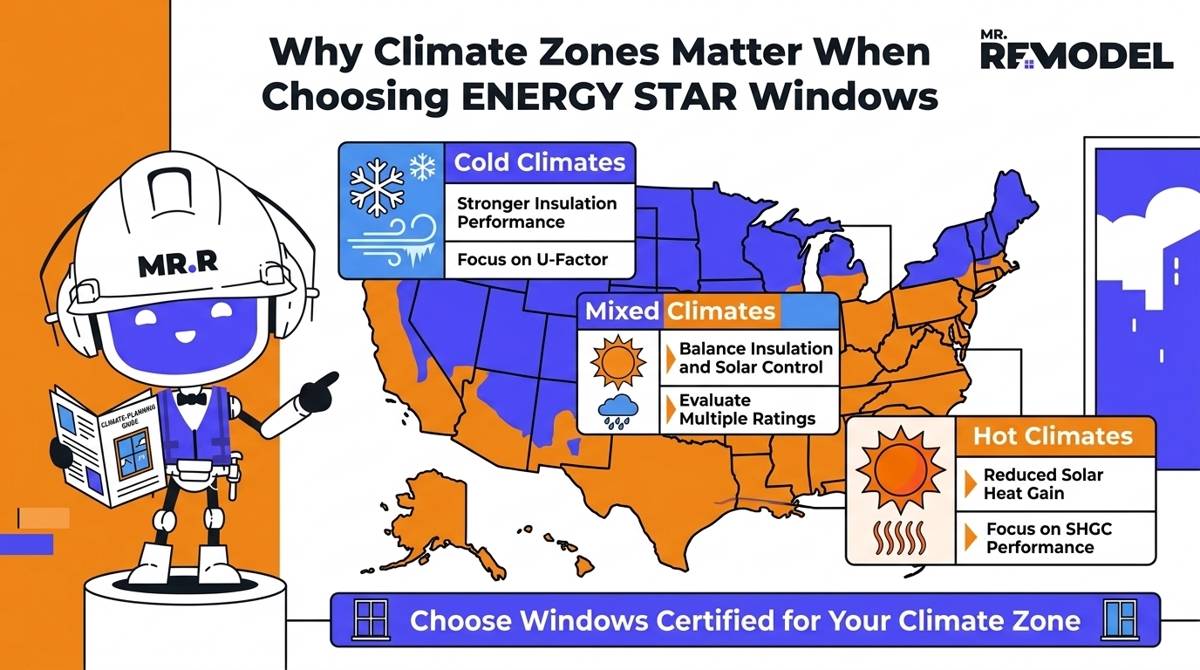
ENERGY STAR window performance requirements vary by climate zone. Homeowners can use the ENERGY STAR Climate Zone Finder to identify the right zone for their location.
Cold climates often need stronger insulation performance. Hot climates may need windows that reduce solar heat gain. Mixed climates may need a balance of both.
Why Installation Quality Matters
The United States Department of Energy (DOE) reports that heat gain and loss through windows account for 25% to 30% of residential heating and cooling energy use. That is why both window selection and installation quality matter.
A high-performing window can still underperform if it is not installed correctly.
Air Leakage
Air leakage happens when gaps around the window allow outside air in and conditioned air out. This can make rooms drafty, uncomfortable, and harder to heat or cool.
A qualified installer should use proper sealing methods and check that the window fits correctly within the opening.
Moisture Protection
Poor installation can allow water to reach the wall cavity, trim, insulation, or framing. Over time, that can lead to staining, rot, mold concerns, or damage around the window.
Moisture protection is especially important in areas with heavy rain, humidity, wind-driven rain, or older exterior siding.
Proper Flashing and Sealing
Flashing helps direct water away from the window opening. Sealing helps reduce air movement.
The DOE’s window replacement guidance notes that windows, flashing, and air sealing should be installed according to manufacturer recommendations.
How to Evaluate Energy Star Window Installers
Because ENERGY STAR certifies products, homeowners need to evaluate installers separately. A good contractor should understand window performance ratings, installation methods, warranty requirements, and local climate concerns.
Homeowners should focus on contractor qualifications, window-installation experience, product knowledge, written estimates, and warranty details before signing.
Licensing and Insurance
Ask whether the contractor is licensed where required. Then request proof of insurance before signing.
Window replacement involves exterior openings, ladders, glass, trim, and sometimes siding or framing work. Insurance helps protect homeowners if property damage or job-site injuries occur.
Window Installation Experience
Ask how often the contractor installs replacement windows and whether they have experience with your window type. Full-frame replacement, insert replacement, wood windows, vinyl windows, and older homes can require different skills.
A contractor should explain which replacement method fits your home and why.
Manufacturer Training
Some window brands offer installer training or preferred-contractor programs. This is not the same as ENERGY STAR certification, but it can show product familiarity.
Ask whether the installer is trained on the specific window brand or system being quoted.
Warranty Coverage
Ask what warranty covers the window product and what warranty covers labor. These are usually separate.
Also, ask whether improper installation could affect the manufacturer's warranty.
Questions to Ask Before Hiring a Window Contractor
Before choosing a contractor, ask questions that reveal both product knowledge and installation quality.
Use this checklist:
- Are the windows ENERGY STAR certified for my climate zone?
- Can you show the ENERGY STAR and National Fenestration Rating Council labels?
- Are you licensed where required?
- Can you provide proof of insurance?
- Do you recommend a full-frame replacement or an insert replacement?
- How will you handle flashing and air sealing?
- What happens if hidden rot or framing damage is found?
- Is interior and exterior trim work included?
- What labor warranty do you provide?
- What manufacturer's warranty applies?
- Are cleanup and disposal included?
- Can you break down labor and material costs?
A qualified contractor should be able to answer these clearly before work begins.
Understanding Window Performance Ratings
Energy-efficient window shopping is easier when you understand the label. The National Fenestration Rating Council (NFRC) provides ratings that help homeowners compare window performance.
U-Factor
U-factor measures how well a window helps prevent heat from escaping. Lower U-factor numbers generally mean better insulation.
This rating is especially important in colder climates.
Solar Heat Gain Coefficient
Solar Heat Gain Coefficient (SHGC) measures how much solar heat passes through the window. Lower SHGC values help reduce heat gain from the sun.
This rating is especially important in warm, sunny climates.
Visible Transmittance
Visible transmittance measures how much visible light passes through the glass. A higher number means more daylight enters the home.
Homeowners should balance daylight, glare, privacy, and heat gain.
Air Leakage Ratings
Air leakage ratings measure how much air passes through the window assembly. Lower air leakage can help reduce drafts when the window is properly installed.
This is another reason installation quality matters.
Ready to compare window contractors? Mr. Remodel is a contractor-matching platform that helps homeowners connect with fully-vetted local contractors for window replacement and installation projects.
ENERGY STAR Rebates and Incentives
Some homeowners may qualify for rebates or incentives when buying energy-efficient windows. Availability depends on location, utility programs, product eligibility, and current program rules.
The ENERGY STAR Rebate Finder lets homeowners search for available offers by location.
Before buying, ask the contractor whether the quoted windows qualify for any local rebates, tax credits, or utility incentives. Also, confirm what paperwork is needed, such as product labels, invoices, or certification documents.
Frequently Asked Questions
What is an Energy Star window installer?
An ENERGY STAR window installer is usually a contractor who installs Energy Star-certified windows, but ENERGY STAR certification applies to the window product, not the installer. Homeowners should verify the contractor’s licensing, insurance, installation experience, product knowledge, and warranty coverage separately.
Do ENERGY STAR windows save money?
ENERGY STAR windows can help reduce energy use when they are correctly selected for the climate zone and properly installed. Actual savings depend on the home, existing windows, climate, heating and cooling system, installation quality, and utility rates.
How do I verify a contractor's qualifications?
Ask for licensing information where required, proof of insurance, window installation experience, manufacturer training, warranty details, and examples of similar projects. You should also ask the contractor to explain how they handle flashing, sealing, trim, and hidden damage.
Are ENERGY STAR windows worth the cost?
ENERGY STAR windows may be worth considering when old windows are drafty, inefficient, damaged, or uncomfortable. The value depends on your climate, current window condition, product selection, installation quality, comfort goals, and whether rebates or incentives are available.
Can poor installation reduce energy savings?
Yes, poor installation can reduce energy savings by allowing air leakage, moisture intrusion, poor sealing, or incorrect fit. Even an ENERGY STAR-certified window needs proper flashing, sealing, and installation according to manufacturer recommendations to perform well.
Finding the Right Contractor for Long-Term Performance
ENERGY STAR window installers can help homeowners improve comfort and efficiency, but the product label is only one part of the decision. ENERGY STAR certification tells you the window meets program criteria, while the installer determines how well that window is fitted, sealed, flashed, and protected.
Before hiring, compare window ratings, climate-zone requirements, installer experience, warranty coverage, and written estimates. To start your project, use Mr. Remodel to connect with fully-vetted local window contractors who can help you plan an energy-efficient window replacement.