1-855-QUOTEMR

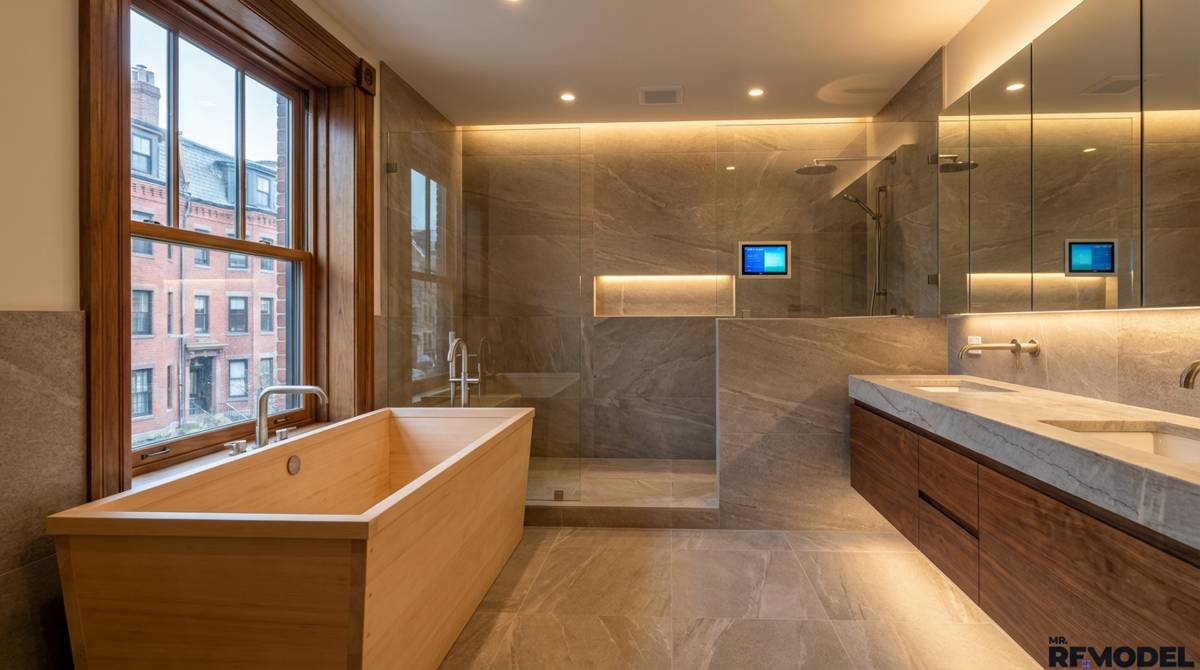
Table of Contents [hide]
Who This Is For
This guide is designed for Boston homeowners planning a comprehensive bathroom renovation in 2026. Whether you own a historic South End brownstone, a Back Bay condo, or a single family home in West Roxbury, this article provides the regulatory, financial, and design data needed to navigate a successful gut renovation.
Key Takeaways
- Code Compliance: All renovations must now adhere to the Massachusetts 10th Edition Building Code, which mandates specific GFCI placement and mechanical ventilation standards.
- Permit Timelines: Short-form permits for non-structural updates typically take one week, while long-form structural permits can take five weeks or more through the Boston Inspectional Services Department.
- Property Nuances: Condo owners must navigate shared plumbing stacks and HOA regulations, while single-family owners should focus on master suite ROI.
- Luxury Trends: Wellness-focused features like deep soaking tubs and smart lighting are the top requests for 2026 high-end remodels.
A complete bathroom remodel in Boston is no longer just about choosing the right tile. It is a complex logistical dance involving historic district regulations, updated state codes, and the structural realities of centuries-old architecture.
According to the National Kitchen & Bath Association (NKBA), nearly 72% of homeowners are now expanding their bathroom footprints to create wellness-centered sanctuaries. In a city where space is at a premium, achieving this luxury requires a deep understanding of local constraints and modern engineering.
Navigating the 2024 Massachusetts 10th Edition Building Code
As of early 2025, the Massachusetts 10th Edition Building Code is the mandatory standard for all residential construction. This update, based on the 2021 International Residential Code, introduces stricter requirements that affect every “gut to studs” project.
Electrical and Safety Standards
Safety is the primary driver of the new code updates. If you are stripping your bathroom down to the framing, your electrical system must be brought up to current standards.
GFCI and Dedicated Circuits
The current code requires all outlets within 6 feet of a water source to have GFCI protection. Furthermore, bathrooms now require a dedicated 20-amp circuit for receptacles to handle high-draw appliances like hair dryers and integrated bidet seats.
Integrated Lighting Technology
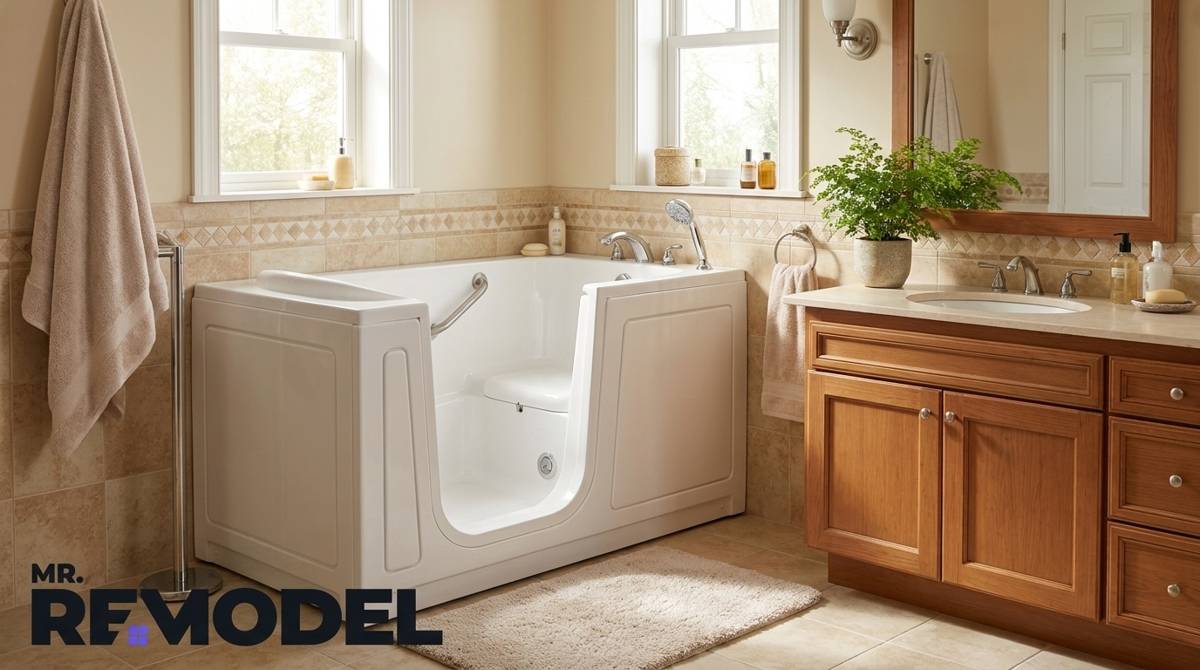
Nighttime-specific lighting and motion-sensing safety lights are becoming standard. The NKBA 2026 report indicates that 80% of designers are now including integrated night lighting to improve safety and accessibility for aging-in-place homeowners.
Ventilation and Moisture Control
Boston’s humid summers and freezing winters make moisture management a critical concern. The Boston Public Health Commission emphasizes proper ventilation to prevent mold growth in tight urban living spaces.
Mechanical Exhaust Requirements
For bathrooms under 100 square feet, the code mandates a mechanical exhaust system capable of at least 50 CFM (Cubic Feet per Minute). This fan must vent directly to the outdoors, never into an attic or crawlspace, which is a common mistake found in older triple-deckers.
Boston Permitting: Short Form vs. Long Form
The Boston Inspectional Services Department (ISD) categorizes bathroom projects based on the scope of work. Understanding which path your project takes will determine your timeline and budget.
The Short-Form Permit Process
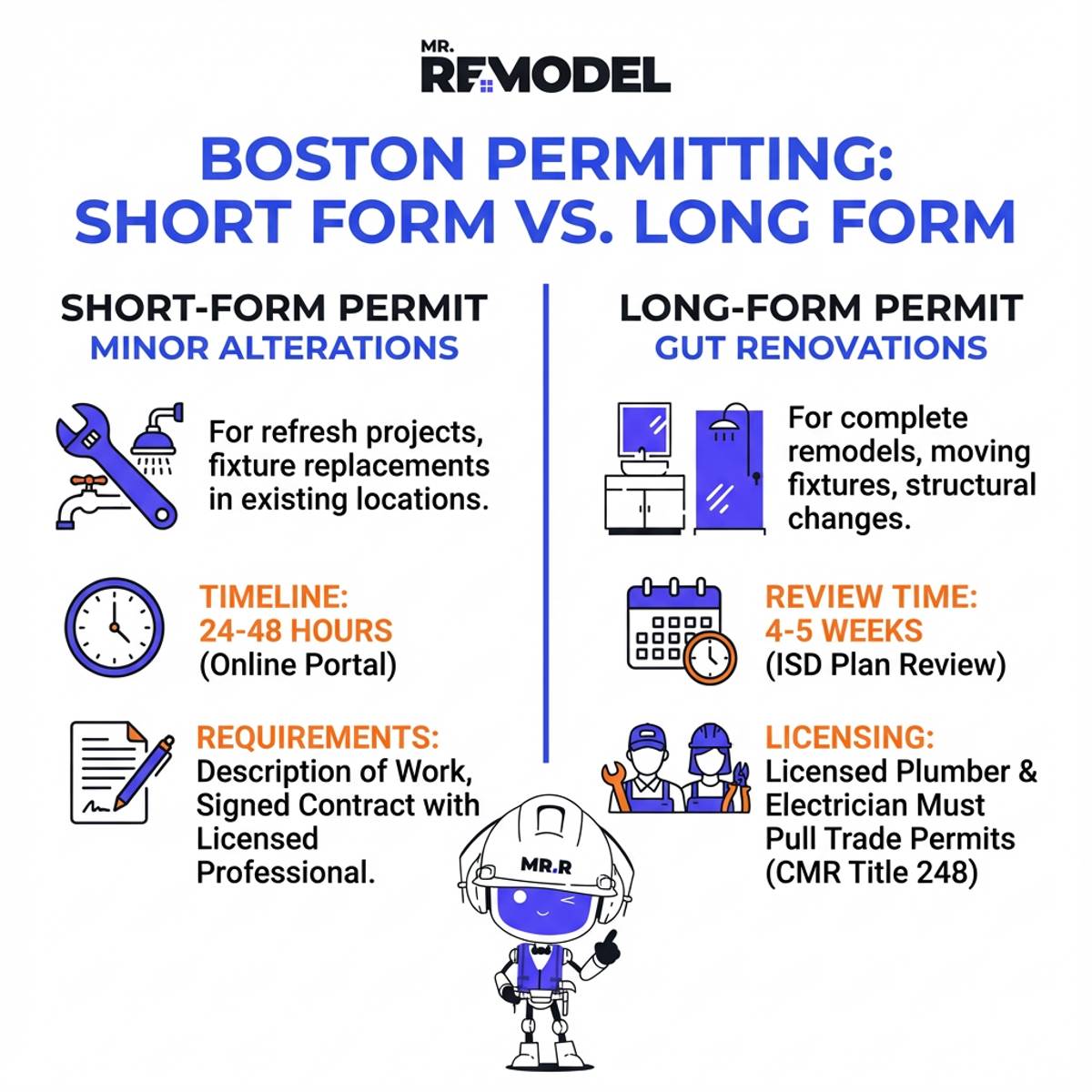
Short-form permits are reserved for minor alterations that do not change the building's use, exits, or structural integrity. This is often the path for refresh projects where you are replacing fixtures in their existing locations.
- Timeline: Usually approved within 24 to 48 hours via the online portal.
- Requirements: You must provide a description of work and a signed contract with a licensed professional.
The Long-Form Permit for Gut Renovations
A complete remodel almost always requires a long-form permit. This is necessary if you are moving a toilet, expanding a shower footprint, or removing a wall to combine spaces.
- Review Time: Expect a 4 to 5 week wait for ISD plan examiners to review your architectural drawings.
- Licensing: Only a licensed plumber or electrician can pull the trade-specific permits required for these projects under the Code of Massachusetts Regulations Title 248.
Boston remodels involve complex administrative tasks, like ISD portal navigation and state licensing. Mr. Remodel simplifies this by connecting you with local experts who handle all permits and historic filings. Start your project with afree quote here to see how pros manage these regulations for you.
|
Pro Tip: If your home is located in Beacon Hill or the Back Bay, you must also secure approval from the Boston Landmarks Commission before any exterior-facing work (like new exhaust vents) begins. |
Property-Specific Remodeling Strategies
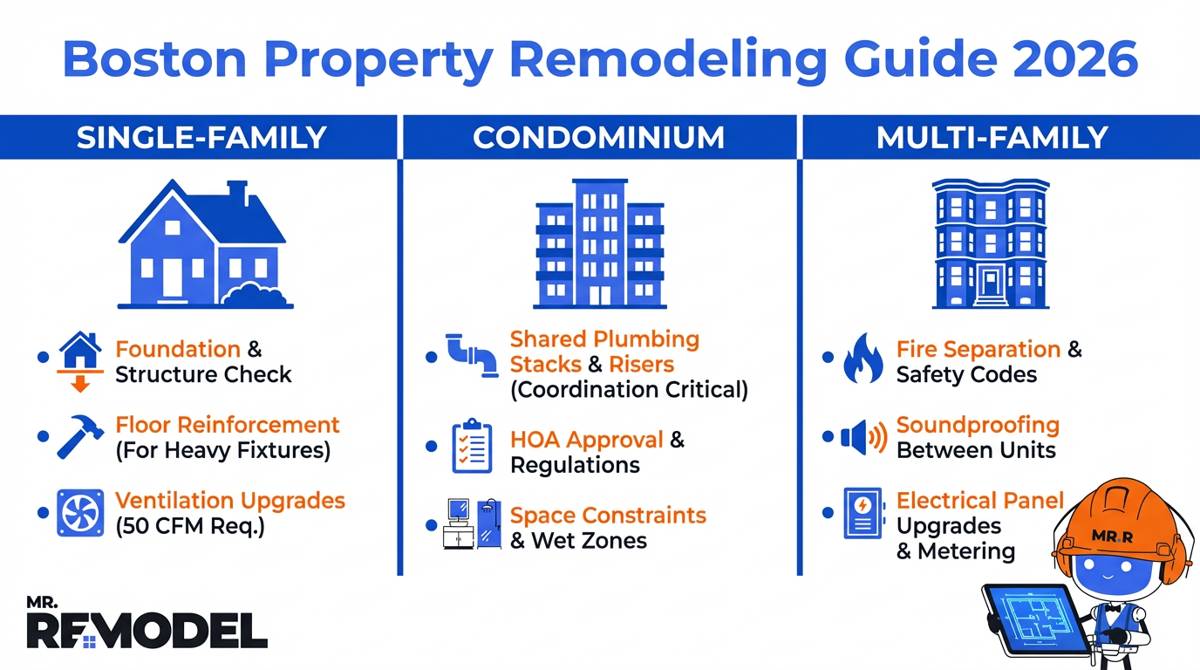
Mr. Remodel data shows that the challenges of a renovation vary widely depending on the building type. Boston's diverse housing stock requires tailored engineering solutions for each property class.
Single-Family Homes: Maximizing ROI
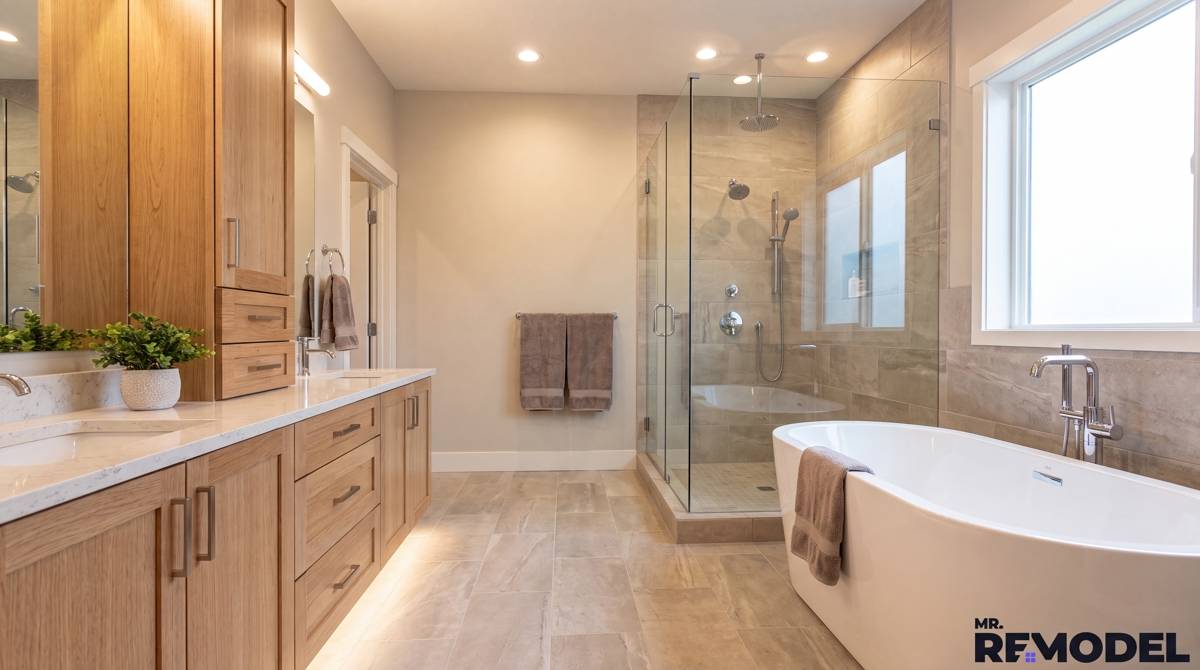
For the 38% of Mr. Remodel leads residing in single-family homes, the focus is typically on the master suite. In these properties, we see a heavy emphasis on "The Anchor Feature," which is often a luxury soaking tub or an oversized walk-in shower.
The Luxury Soaking Tub Challenge
High-end soaking tubs are the #2 most requested upgrade in Boston. However, these tubs can weigh over 1,000 pounds when filled. Structural loading must be verified to ensure the floor joists of an older home can support the weight.
Condos and Brownstones: The Shared Stack Reality
Condo renovations in areas like the South End are limited by shared stacks. You cannot easily move a toilet if it connects to a main waste line shared by three other units. Factors to keep in mind include:
- HOA Coordination: Most HOAs require a water shut-off notice for the entire building.
- Noise Ordinances: Construction hours are strictly enforced in dense residential neighborhoods.
Multi-Family and Triple-Deckers: Durability First
For multi-family investments, the goal is longevity. Using moisture-resistant materials like porcelain tile and solid-surface vanities ensures the unit withstands tenant turnover while meeting the Boston Design Standards for Residential Finishes.
|
PROPERTY TYPE |
TOP PRIORITY |
COMMON HURDLE |
|
Single-Family |
Master Suite Luxury |
Floor Reinforcement |
|
Condominium |
High-End Finishes |
Shared Plumbing Stacks |
|
Multi-Family |
Durability/Low Maintenance |
Outdated Electrical Systems |
The Real Cost of a Boston Bathroom Remodel in 2026
While generic online calculators suggest low figures, the reality of the Boston market involves higher labor rates and complex permitting fees. According to recent market data, a mid-range bathroom renovation in Boston typically falls between $18,000 and $35,000.
Breakdown of Major Expenses
A “gut to studs” renovation involves several layers of professional labor and material costs.
- Plumbing: $4,000 to $9,000 (Includes new rough-ins and fixture installation).
- Tile and Masonry: $3,000 to $7,000 (Depends on material choice, like marble vs. porcelain).
- Electrical: $1,500 to $3,500 (Including new circuits and smart lighting).
- Permit Fees: $20 to $50 per $1,000 of the total project value.
Wellness Upgrades and Their Value
Investing in wellness features is a primary trend for 2026. Custom storage solutions for grooming tools and spa-like shower systems are now expected in high-end Boston listings.
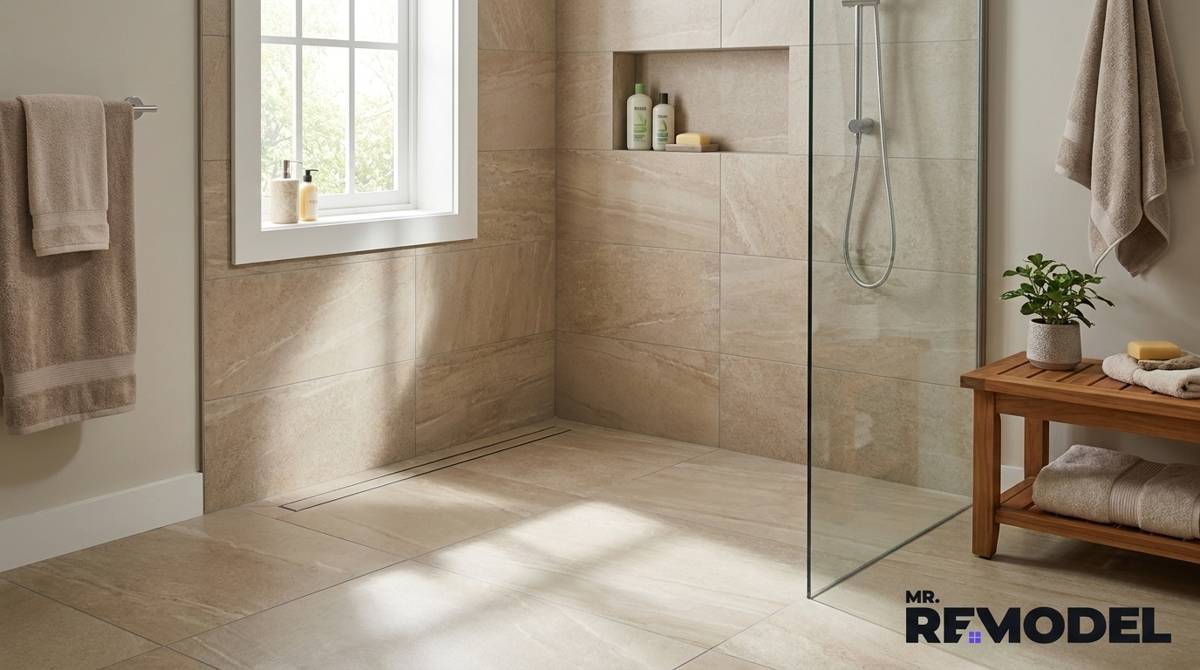
Our data at Mr. Remodel indicates that projects focusing on Universal Design, such as curbless showers and grab bars that look like high-end hardware, see the highest retention of value.
FAQ About Boston Bathroom Remodels
Do I need a permit to replace a bathtub in Boston?
Yes. Under the Massachusetts Uniform State Plumbing Code, a licensed plumber must pull a permit for any fixture replacement or relocation. This ensures the drainage and venting systems are properly sealed to prevent sewer gas leaks. Mr. Remodel partners only with licensed professionals who handle the entire permitting process for you.
How long does a full bathroom gut renovation take?
A typical “gut to studs” remodel in Boston takes 5 to 8 weeks. This timeline includes demolition, rough-in inspections, tiling, and final fixture installation. Complex condo projects may take longer due to building-specific rules regarding elevator use and construction hours.
What is the most expensive part of a bathroom remodel?
Labor and plumbing relocation are typically the highest costs. Moving a toilet, even a few inches, can require significant floor surgery and pipe rerouting. To stay within budget, Mr. Remodel experts often suggest keeping the primary plumbing footprint while upgrading the quality of the finishes.
Can I remodel my bathroom myself to save money?
In the City of Boston, you are legally required to have licensed professionals perform electrical and plumbing work. While you may be able to handle painting or tiling yourself, a professional gut renovation ensures your home remains compliant with insurance requirements and future resale inspections.
Building for the Future of Boston Living
A successful bathroom remodel in 2026 requires a balance of historic preservation and modern technology. Whether you are managing the shared stacks of a Back Bay condo or the structural joists of a Dorchester triple-decker, professional guidance is the key to a stress-free transformation.
Ready to start your renovation journey? Contact Mr. Remodel today to receive a free quote and connect with top-rated Boston contractors who understand the local landscape.