1-855-QUOTEMR

Table of Contents [hide]
Who This Is For
This guide is for homeowners planning a window replacement project in 2026. It is specifically designed to help you balance technical energy efficiency requirements with regional cost data to maximize your home’s ROI.
Key Takeaways
- Marine Climates: High moisture levels make fiberglass the top choice, reflected in the highest per-unit investment of $4,113.
- Cold Climates: Priority remains on a U-factor of 0.22 or lower to prevent heat loss during severe winters.
- Hot Climates: Low Solar Heat Gain Coefficient (SHGC) ratings are essential, with high-performance vinyl offering the best value.
- Moderate Regions: Homeowners maximize value by replacing more windows at once (7.4 units on average) due to lower per-unit costs.
Selecting the right window frame is no longer just about aesthetics. In 2026, heat gain and loss through windows still account for 25% to 30% of residential heating and cooling energy use. This makes your choice of frame material a high-stakes financial decision.
Understanding how different materials react to your specific geography is the first step. Whether you are battling the salt air of the Pacific Northwest or the blistering sun of the Southwest, your frame must perform. This guide breaks down the data you need to choose wisely.
The Technical Foundation: U-Factor and SHGC
Before looking at materials, you must understand the two primary metrics used by the National Fenestration Rating Council (NFRC). These numbers dictate how a window will perform in your specific climate zone.
Understanding the U-Factor
The U-factor measures the rate of non-solar heat flow through a window. Essentially, it tells you how well the window insulates. A lower number indicates better resistance to heat flow.
In northern or cold climates, the U-factor is the most critical metric. You want to keep the heat inside your home during the winter. Modern standards often require a U-factor of 0.22 or lower for maximum efficiency.
Decoding Solar Heat Gain Coefficient (SHGC)
SHGC measures how much solar radiation passes through the glass and frame. This is expressed as a number between 0 and 1. A lower SHGC means the window blocks more heat from the sun.
In southern or arid climates, a low SHGC is vital. It prevents your home from turning into a greenhouse during July. Current recommendations for hot climates often target an SHGC of 0.23 or lower.
Climate-Specific Performance and Investment Trends
Regional weather patterns dictate which materials are worth the investment. Mr. Remodel data reveals how homeowners across the United States are currently spending on their window projects.
Market Investment Data by Climate Zone
The following table highlights the real-world costs and project scales based on Mr. Remodel market analysis.
|
Climate Zone |
Avg. Cost Per Window |
Avg. Windows Per Project |
Strategic Insight |
|
Marine / PNW |
$4,113 |
5.8 |
High demand for fiberglass due to moisture. |
|
Cold / Severe |
$3,239 |
4.9 |
Heavy investment in thermal U-factor ratings. |
|
Mediterranean |
$3,384 |
3.7 |
Smaller, boutique projects with premium aesthetics. |
|
Hot / Arid |
$2,718 |
4.6 |
High-performance vinyl used for UV protection. |
|
Moderate / Mixed |
$2,680 |
7.4 |
Volume value: replacing most windows at once. |
Marine and Pacific Northwest: Resisting the Elements
Homeowners in Marine climates face unique challenges. Constant moisture and salt spray can wreak havoc on traditional materials. This explains why this region sees the highest average cost per window at $4,113.
Why Fiberglass Wins in the Rain
Fiberglass is the gold standard for wet climates. It is made from glass fibers and resin, meaning it expands and contracts at the same rate as the glass panes. This reduces the risk of seal failure.
Fiberglass does not rot, warp, or corrode. For those in the PNW, this durability justifies the higher upfront cost. It provides a long-term solution that requires almost zero maintenance over its 30 to 40-year lifespan.
The Role of Composite Frames
Composite frames are another strong contender for damp regions. These are often made from a mix of wood fibers and polymer plastics. They offer the look of wood without the susceptibility to rot.
According to research from the University of Minnesota, composites are exceptionally stable. They provide excellent moisture resistance while maintaining high thermal performance. This makes them a viable alternative to pure fiberglass for high-end homes.
Cold and Severe Climates: The Battle Against Heat Loss
In regions where snow is a regular guest, the focus shifts entirely to insulation. Homeowners here spend an average of $3,239 per window. Most of that budget goes into maximizing the thermal barrier.
High-Performance Vinyl with Foam Insulation
Vinyl remains a popular choice because it is naturally non-conductive. However, in severe cold, standard hollow-core vinyl may not be enough. Multi-chambered vinyl frames filled with specialized foam insulation are preferred.
These insulated vinyl frames significantly lower the overall U-factor of the unit. They provide a cost-effective way to meet strict energy codes. It is a practical balance between price and performance for most households.
The Thermal Excellence of Wood
Wood is a natural insulator. It has been the traditional choice for cold climates for centuries. When properly maintained, wood frames provide some of the best thermal resistance available.
However, wood requires significant upkeep to prevent moisture damage from melting snow. Many homeowners now opt for wood frames with aluminum or vinyl cladding on the exterior. This combines the warmth of wood inside with a durable shield outside.
If you are unsure which material fits your budget, platforms like Mr. Remodel can connect you with local experts who understand your specific regional requirements.
Hot and Arid Regions: Blocking the Burn
In the Southwest and other arid zones, the sun is the primary enemy. The average cost per window drops to $2,718 here. This lower price point is often due to the widespread use of high-performance vinyl.
Vinyl as a UV Barrier
Modern vinyl frames are treated with UV stabilizers. These additives prevent the material from breaking down or becoming brittle under intense sunlight. This is a critical feature for longevity in desert environments.
Because cooling is the main concern, homeowners focus on the glass coatings rather than the frame's bulk. A quality vinyl frame paired with spectrally selective Low-E glass offers the best quality in these zones.
Aluminum with Thermal Breaks
While standard aluminum is a poor insulator, it is incredibly strong and sleek. In hot climates, manufacturers use a thermal break. This is a non-conductive strip placed between the interior and exterior sections of the frame.
Thermally broken aluminum is ideal for modern architectural styles with large glass spans. It resists the intense heat and does not expand significantly. This ensures the window remains functional even after years of sun exposure.
Moderate Climates: Maximizing the Scope
In moderate or mixed climates, homeowners have more flexibility. The focus shifts from extreme performance to whole-home efficiency. We see the highest number of windows replaced per project (7.4) in these areas.
Leveraging the Economy of Scale
Because the per-unit cost is the lowest at $2,680, homeowners can afford to replace more units at once. This strategy provides a better overall ROI for the entire property. It ensures consistent insulation across all rooms.
High-quality vinyl or mid-range composites are the most common choices here. They provide enough thermal resistance for occasional cold snaps. They also handle the summer humidity without requiring constant maintenance.
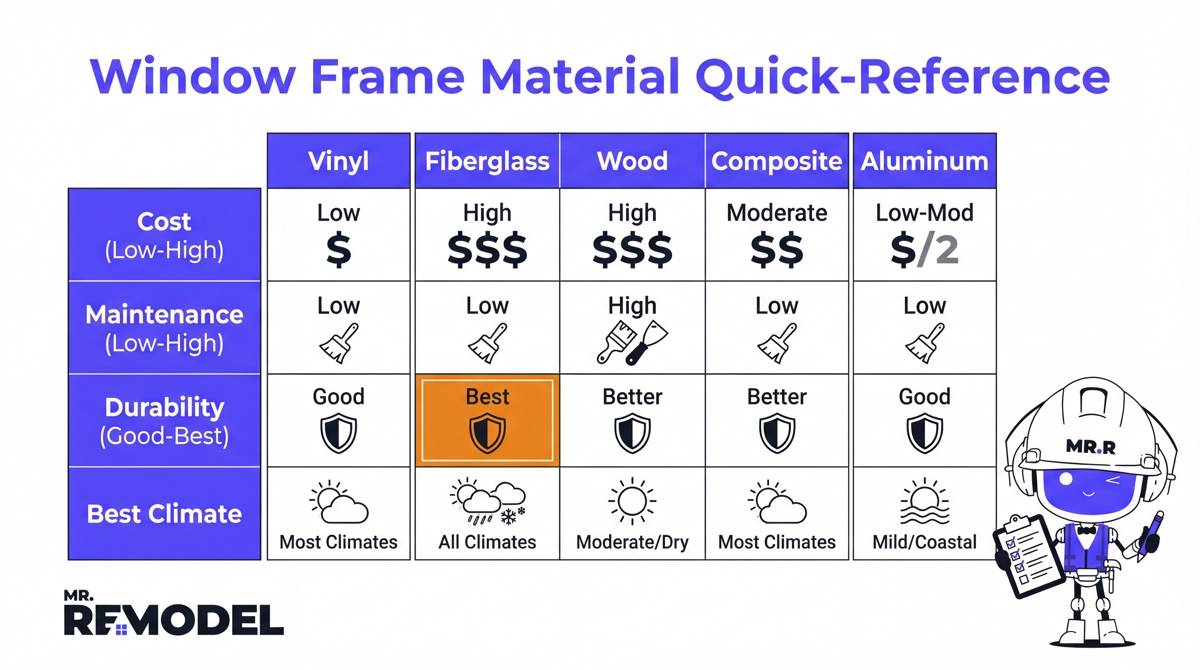
Comparing Frame Materials: A Quick Reference
Choosing the best window frame by climate involves weighing several factors. Use this list to compare your options quickly.
- Vinyl: Most affordable and low maintenance. Best for Hot/Arid and Moderate climates.
- Fiberglass: Most durable and stable. Best for Marine and extreme temperature swings.
- Wood: Best natural insulation and traditional look. Requires high maintenance.
- Composite: Great moisture resistance with a wood-like appearance. A premium versatile choice.
- Aluminum: Strong and modern. Must have a thermal break to be energy efficient.
Frequently Asked Questions
Which window frame material lasts the longest?
Fiberglass typically has the longest lifespan, often exceeding 40 years. It resists warping and rot better than any other material. Vinyl usually lasts 20 to 30 years, while wood can last 50 years, but only with rigorous maintenance.
Is triple-pane glass worth it for my climate?
Triple-pane glass is highly recommended for Cold and Severe climates. It provides an extra layer of insulation that significantly reduces heating bills. In moderate or hot climates, double-pane glass with advanced coatings is usually sufficient.
How do I know if a window is truly energy efficient?
Look for the ENERGY STAR label and the NFRC rating. These certifications ensure the window meets specific performance standards for your region. Always check the U-factor and SHGC on the label.
Can I mix different frame materials in one house?
While you can, it is rarely recommended for aesthetic and structural reasons. However, you might use different glass types. For example, use lower SHGC glass on south-facing windows and higher SHGC on north-facing ones.
How can I get an accurate cost estimate for my area?
Platforms like Mr. Remodel help by matching you with local contractors who provide free, localized quotes. This ensures you get pricing based on your specific market rather than national averages.
Does the frame material affect the soundproofing of a window?
Yes, heavier materials like wood and fiberglass generally provide better sound dampening than standard hollow vinyl. If noise reduction is a priority, consider frames with higher density or those designed with multi-chambered insulation.
Choose the Perfect Window Material for Your Home
Choosing the best window frame by climate requires a balance of technical performance and budget. Marine climates demand the durability of fiberglass. Cold regions require the high insulation of wood or foam-filled vinyl. Hot zones benefit most from UV-resistant vinyl and low SHGC glass.
Mr. Remodel data shows that investment levels vary wildly by region. Understanding these trends helps you avoid overspending on features you don't need. It also ensures you don't skimp on the protections your home requires to stay comfortable.
Ready to upgrade your home's efficiency? Mr. Remodel connects you with top-rated local contractors to provide free, no-obligation quotes tailored to your specific climate and budget needs.